Concept & Archival Development

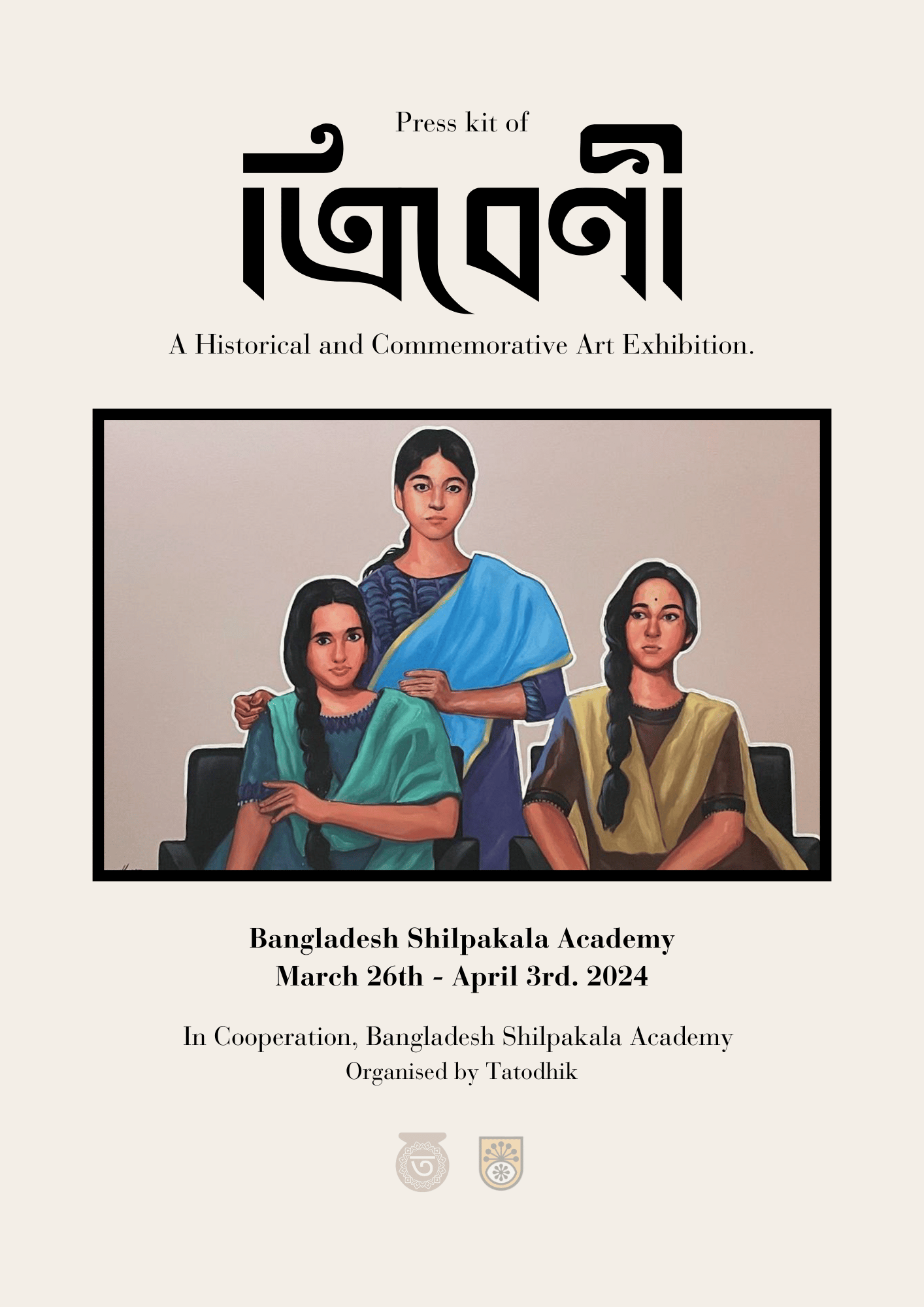
Tribenee I

Practice Type

Curation

Focus

Concept development,
archival reconstruction,
oral history documentation &
exhibition narrative framing

Timeline

April 2024 & December 2025

Exbition overview

Tribenee reconstructs memory through archive, atmosphere, and lived intimacy.

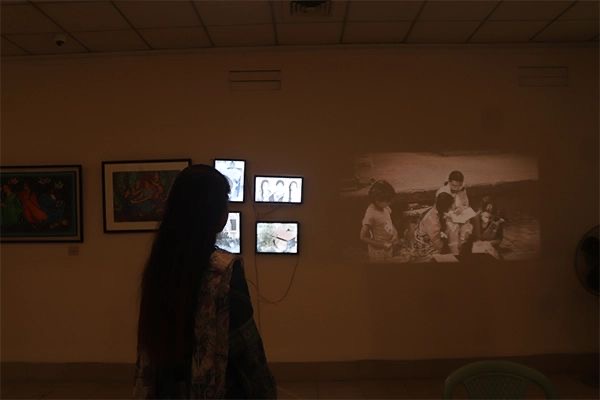
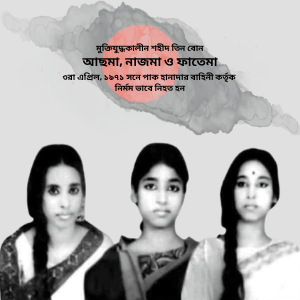
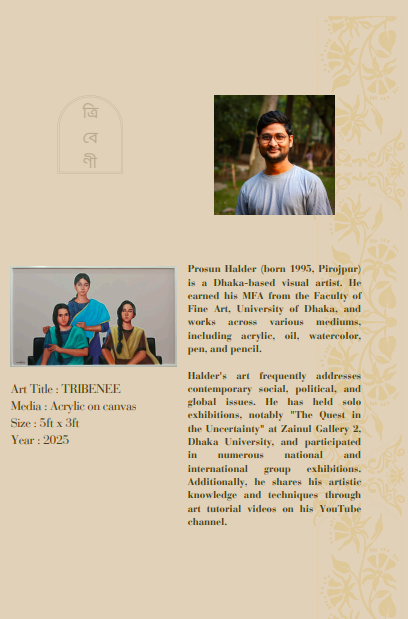
Tribenee is an archival exhibition centered on the intertwined lives of three sisters whose childhood in Chattogram was interrupted during the Liberation War of 1971. Rather than presenting them solely through historical tragedy, the exhibition restores their everyday presence — reading together, crafting textiles, sharing domestic rituals — as forms of lived memory.

Through photographs, oral testimony, and spatial reconstruction, Tribenee situates personal history within collective remembrance. The exhibition invites viewers to encounter memory slowly — where absence becomes visible and silence acquires texture.

My role

As Curatorial Assistant (Concept & Documentation Lead), I independently developed the exhibition’s conceptual framework and research structure. My work centered on transforming intimate family history into a coherent public narrative without reducing it to spectacle.

Independent concept development

Archival collection and family documentation

Oral history interview with Professor Dr. Muzaherul Huq

Photographic documentation of former residence

Timeline reconstruction

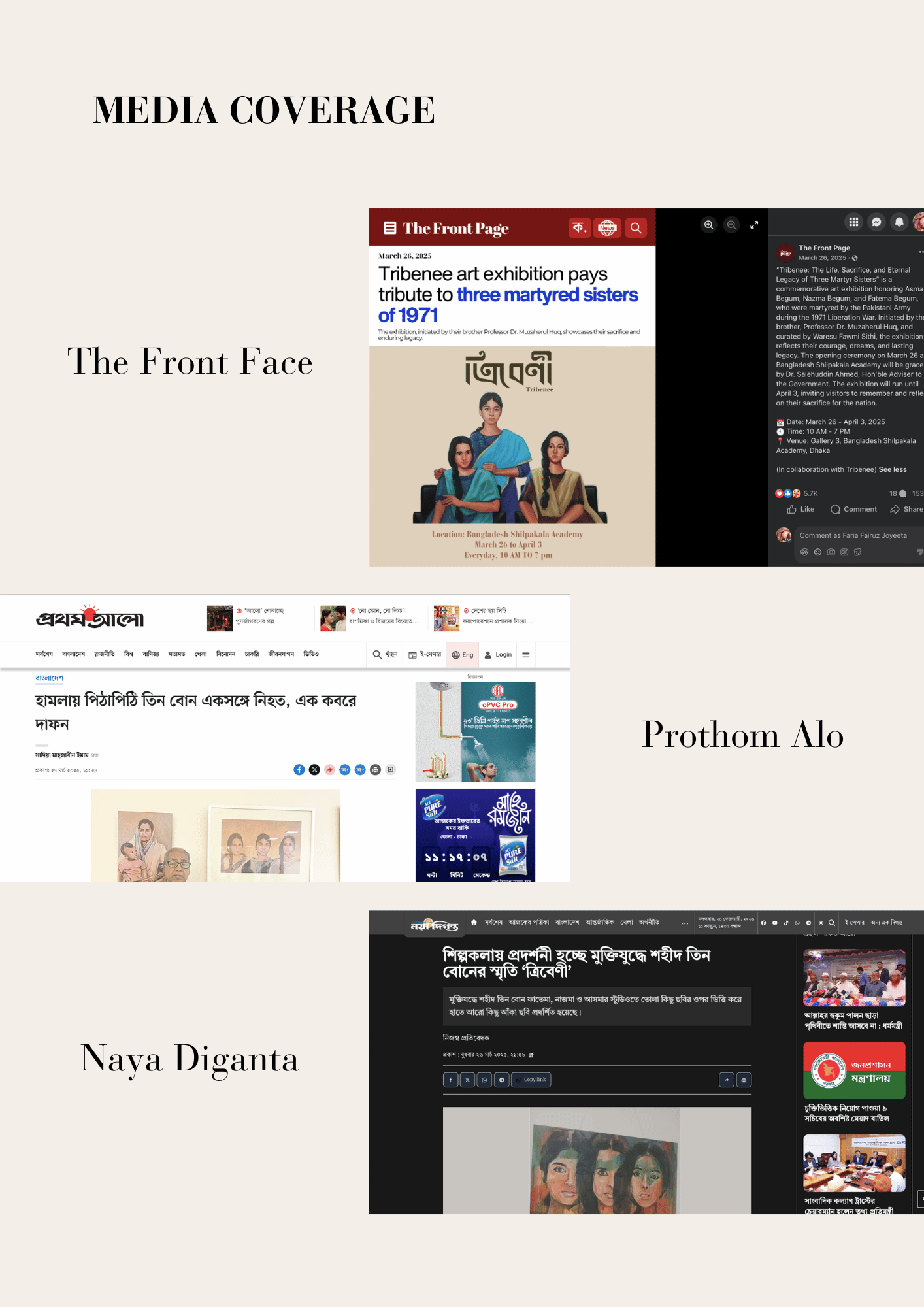
Press narrative preparation for media circulation

Archival & Research Section

ORAL TESTIMONY

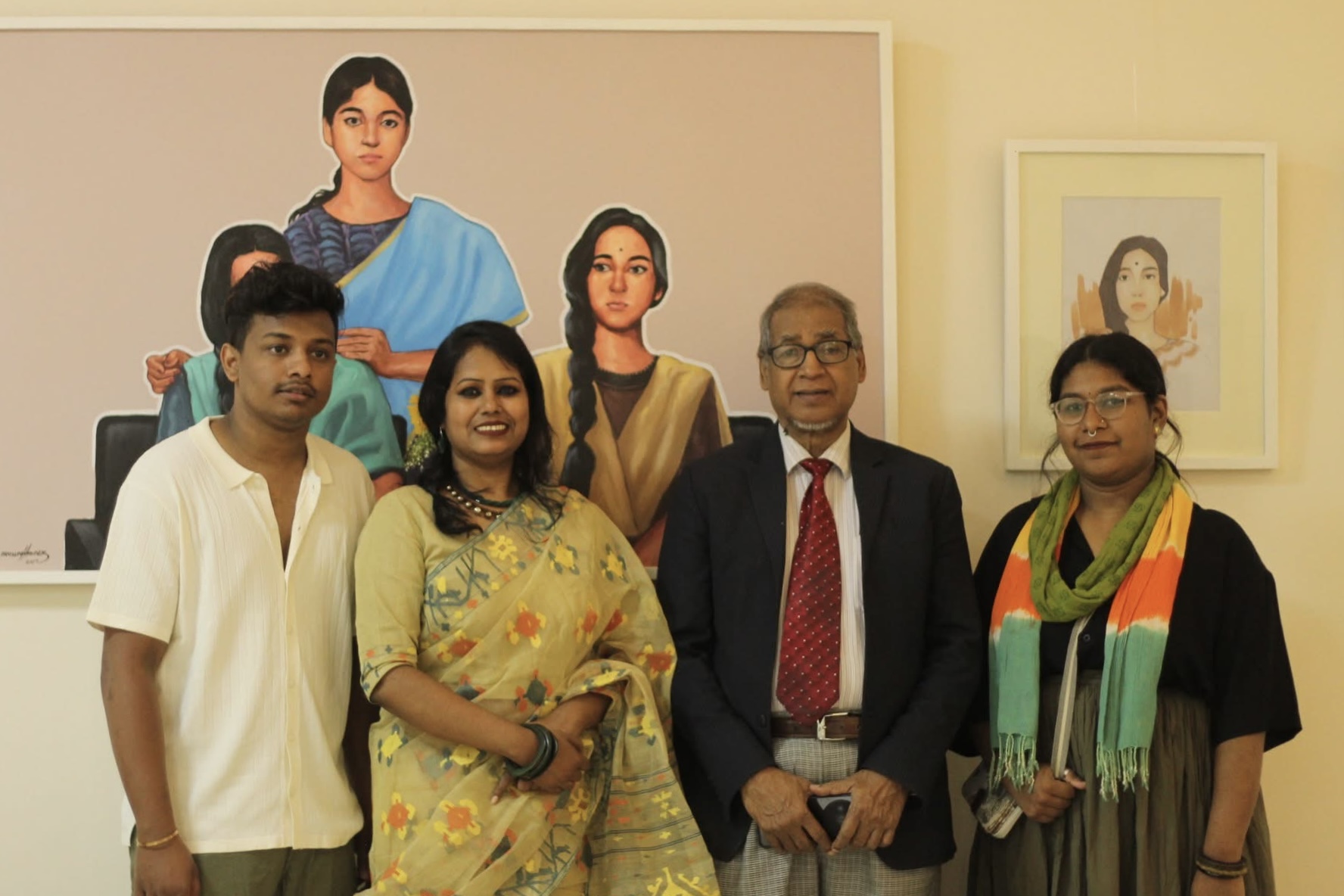
Our initiator, Professor Dr. Muzaherul Huq, visionary behind Tribenee — is, above all, the devoted brother of Asma, Najma, and Fatema. His involvement comes from a place of deep personal memory, shaping the exhibition with care, generosity, and quiet determination to honour the sisters he lost in 1971.
He recalls moments and his sisters’ familiar teasing, that still stay with him:
“ভাই তুই কবে ডাক্তার হবি?
ভাই ডাক্তার হলে তারপরে বিয়ে করব।”
These memories shape the heart of Tribenee—a tribute built from love, loss, and an unwavering commitment to keeping their story alive.

“মা চিৎকার করে বেরিয়ে এসে বললেন,
তোর আর তোর বোনদের বিয়ে দিতে হবে না!”

AFTER THE ARCHIVE

Tribenee was less about “telling history” and more about learning how memory speaks.

Archives demand responsibility.

Working on Tribenee meant understanding that archival material is not neutral. Every photograph, object, and testimony carries emotional weight. The challenge was to construct a narrative that preserved dignity while making absence perceptible.

Concept development required restraint. Instead of dramatizing loss, the exhibition was built through quiet accumulation — fragments of domestic life, oral memory, and spatial rhythm. Meaning emerged not from spectacle, but from proximity.

Tribenee taught me that communication is not only about amplification. Sometimes it is about creating conditions where silence can be heard.