Program Assistant (Intern)
Shunno Art Space
Practice Type
Community-based
Focus
Show, exhibition and
program support
Duration
July 2025 — December 2025
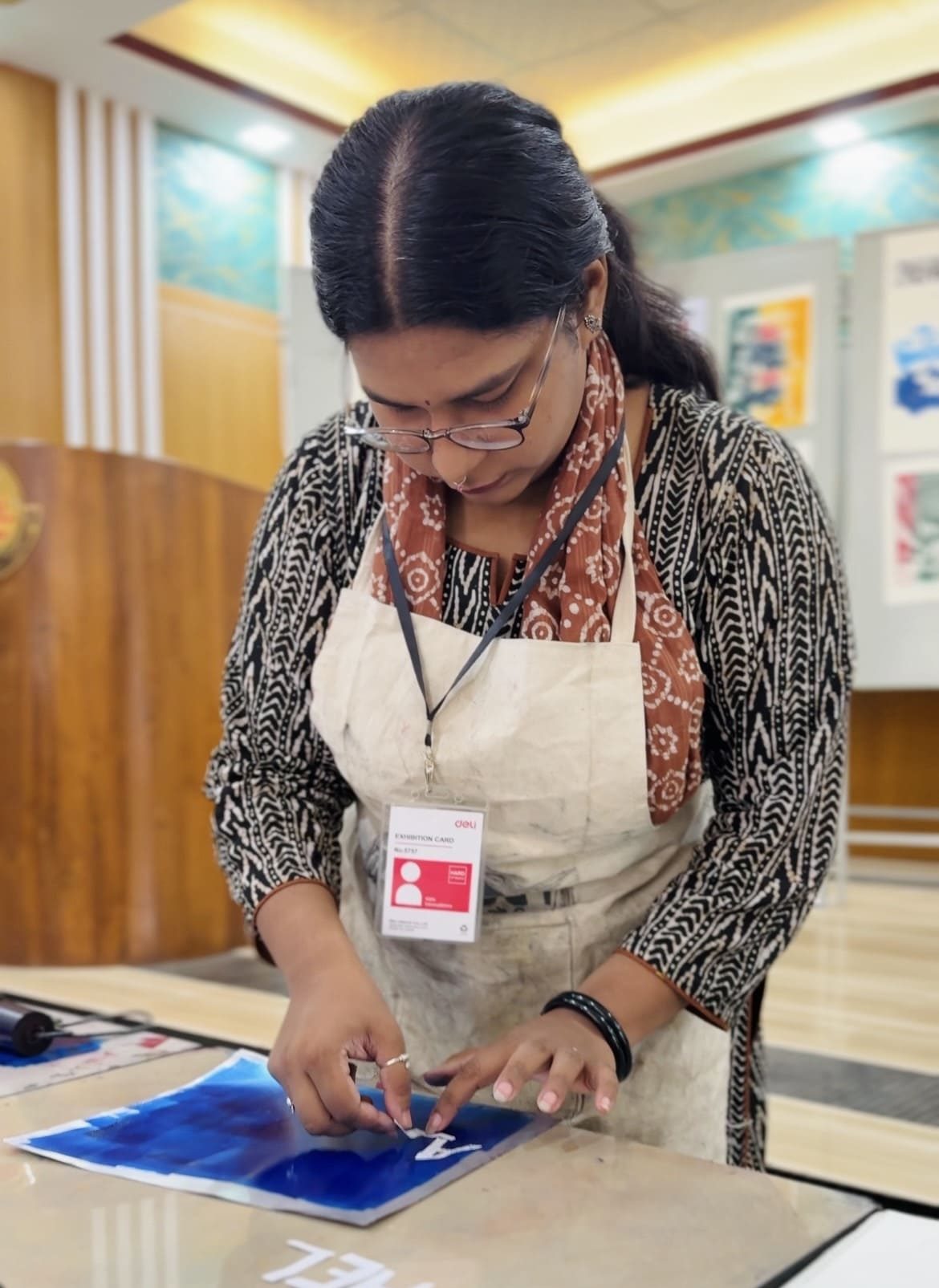
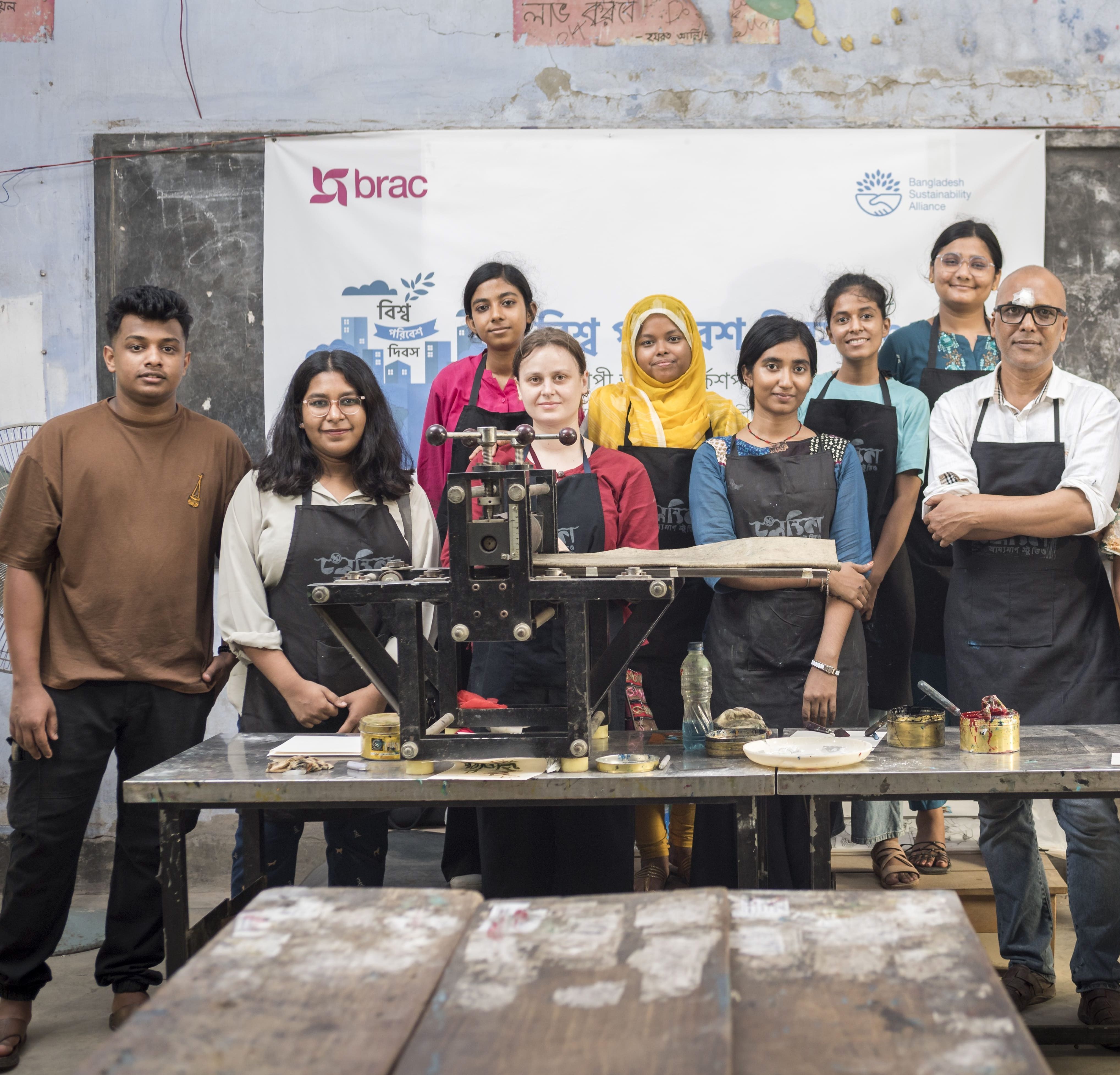
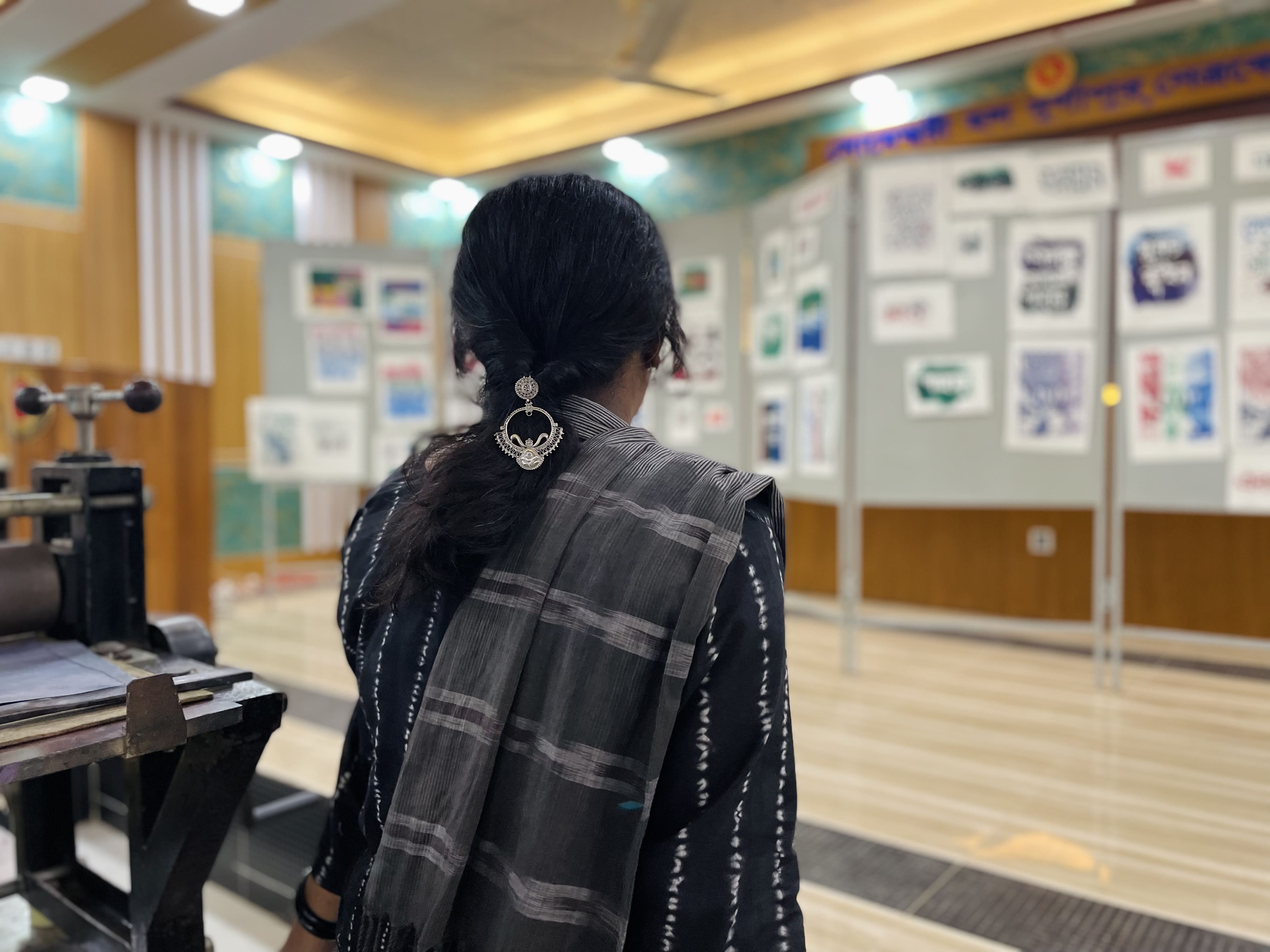
Project overview
Shunno Art Space operates as a platform for contemporary artistic dialogue, public engagement, and community-centred programming. The space brings together artists, audiences, and cultural practitioners through exhibitions, workshops, and collaborative events.
My role
As a Program Assistant (Intern), I supported exhibition development and public engagement across six major shows. My involvement included participating in curatorial discussions, coordinating with artists and participants, assisting in installation processes, and contributing to documentation and audience interaction.
The role required attentiveness to both conceptual framing and logistical execution — ensuring exhibitions remained accessible, organised, and responsive to visitors.
Between Walls & People
Working at Shunno Art Space placed me inside the mechanics of exhibitions and cultural programming. I wasn’t only observing from the outside — I was part of installation days, curatorial discussions, audience conversations, and the quiet coordination that makes a space function. Every project required attentiveness to artists, visitors, and the shifting rhythm of the room.
From preparing walls and arranging works to engaging with guests and documenting unfolding moments, my role moved between structure and spontaneity. I learned how an art space becomes meaningful not just through artworks, but through interaction, dialogue, and collective presence.
At Shunno, I learned that a space only becomes alive when people begin to inhabit it.
Exhibition installation and spatial setup
Audience engagement and dialogue facilitation
Documentation and event coordination
Support in curatorial preparation
Emerging voices on climate and care
VERDANT VERSES
21 TO 23 March 2024
“Verdant Verses” gathered works by participants from the Golaidanga initiative, individuals stepping into exhibition space for the first time located in Aloki, Tejgaon. Their prints addressed environmental fragility and ecological responsibility through colour and repetition.
I contributed to curatorial discussions and led the installation of participant prints across the space. During public hours, I focused on audience engagement, contextualising the exhibition’s intent and facilitating interaction. A dedicated printmaking corner invited visitors to create custom environmental impressions, where I assisted in production. I also handled documentation throughout the exhibition.
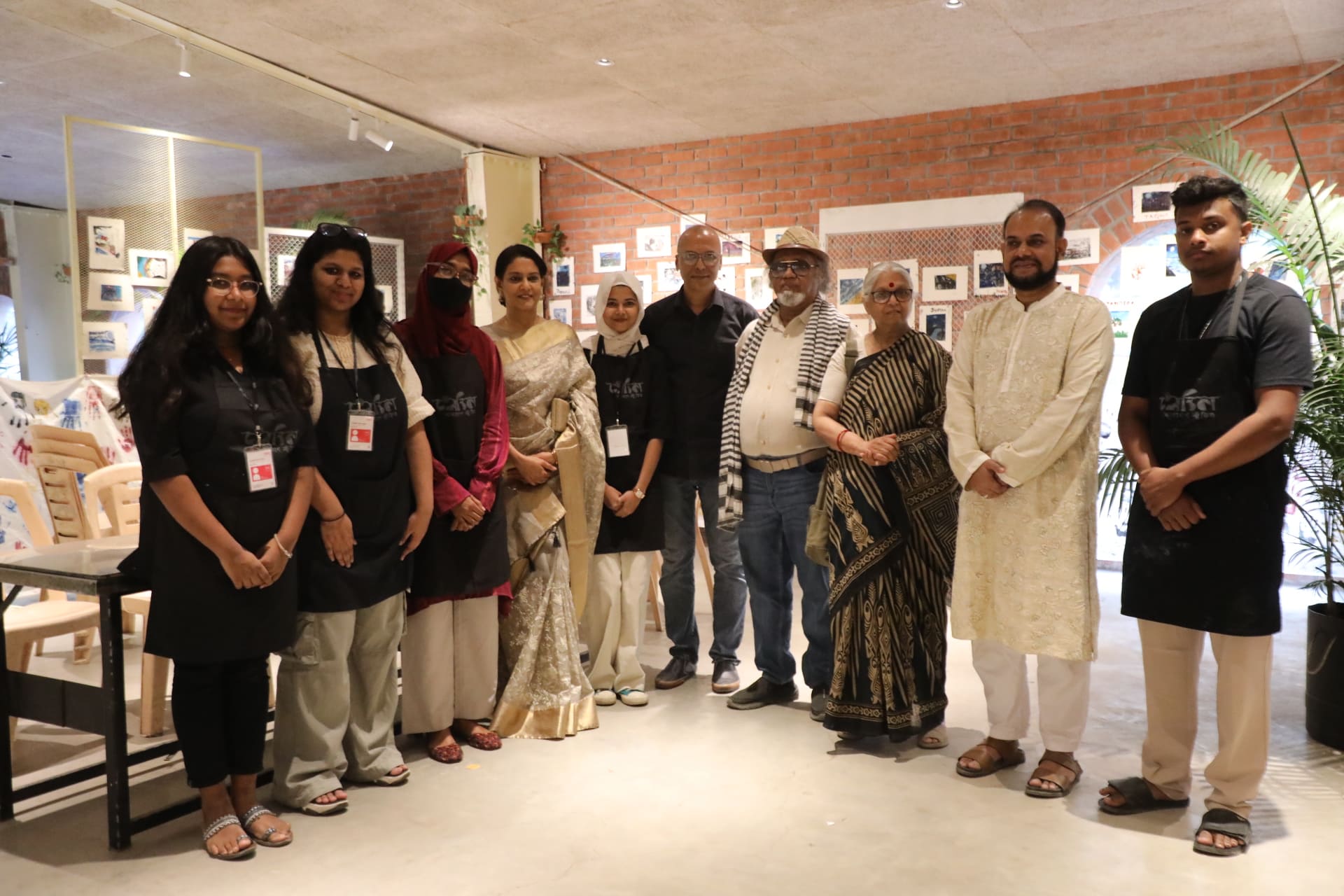
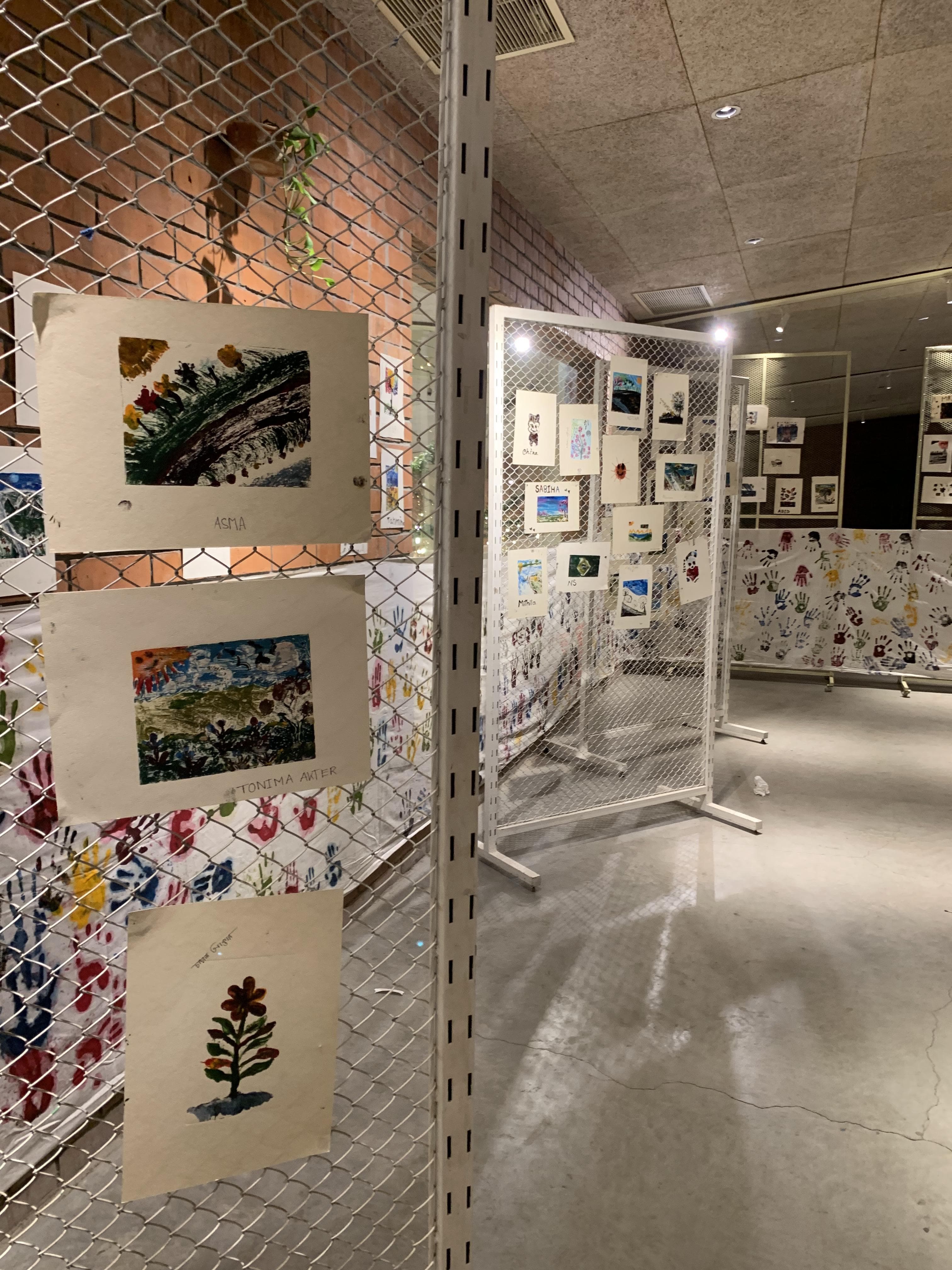
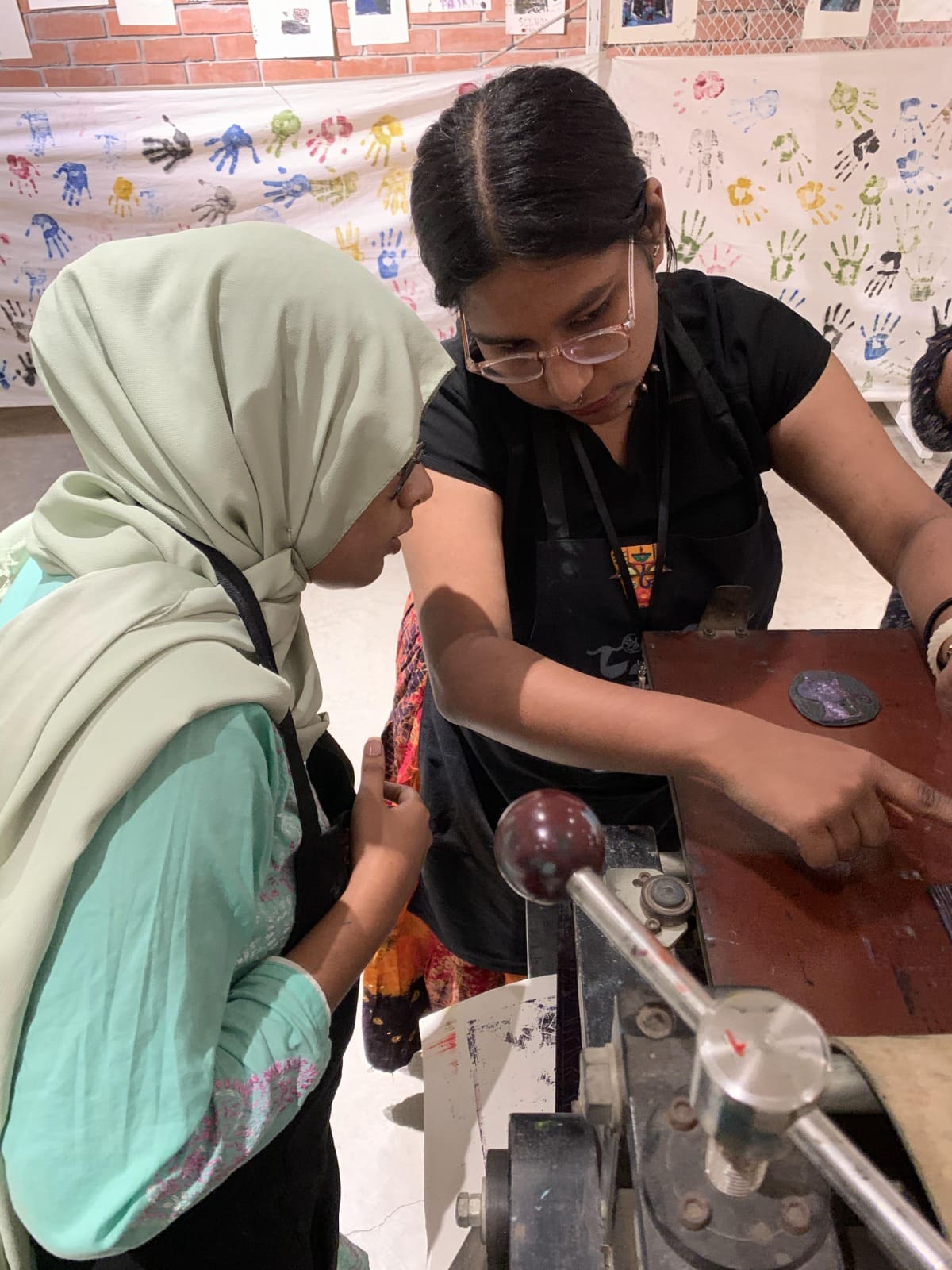
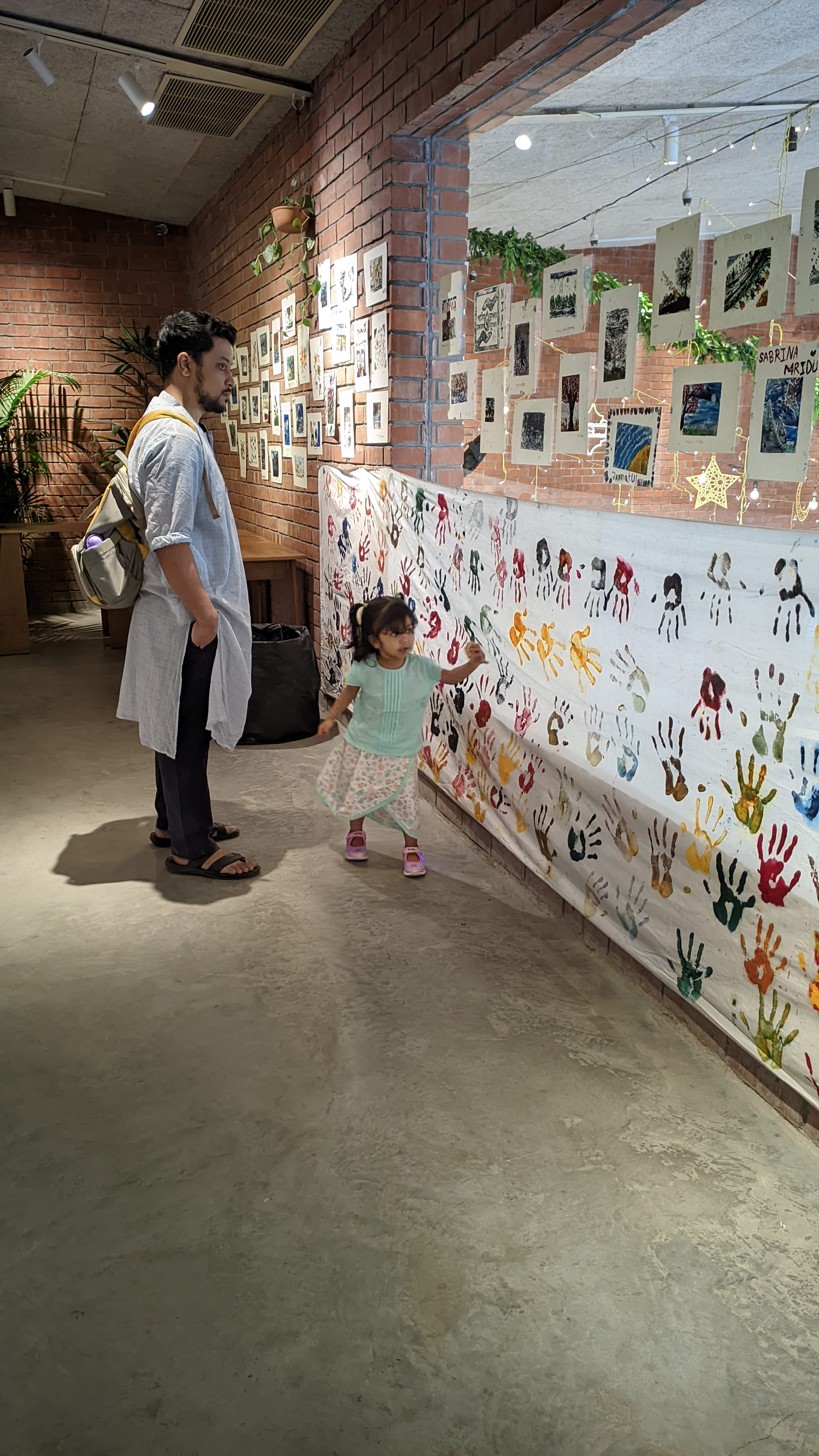
The exhibition featured works created by non-professional contributors. An interactive print station operated continuously during the programme. The initiative functioned as a charity-based exhibition, managed through internal coordination and documentation.
Commissioned poster series for The World Bank
COUNTRY ENVIRONMENTAL ANALYSIS 2023 (CEA)
Presentation event · 28 March 2024
For a high-level environmental policy presentation organised in Dhaka in March 2024, I worked alongside Mehedi Hasan under the direction of Jafar Iqbal Jewel to produce a commissioned series of hand-pulled prints. The visuals originated from Chalantika’s climate-oriented workshops and were reformatted for an institutional audience.
My contribution focused on the manual production process, assisting in preparation, inking control, and execution of the full print run within a coordinated timeline. The project required technical precision, workflow coordination, and consistency across 160 impressions to meet formal presentation standards.
A total of 160 hand-pulled posters were produced for the commission. Six selected graphics were formally presented to the Environment Minister. Printed copies were distributed among invited stakeholders at the event. The project extended workshop-based environmental visuals into a policy-level platform.
Acoustic gathering
THEREFORE, NOVEMBER
18 TO 19 OCTOBER 2024
“Therefore, November” was a four-hour live music gathering co-hosted by The Panda Factory and Shunno Art Space, transforming the café into an intimate performance venue. The evening featured performances by Shafi Hasan, Azwaad, Yer Blues, and Teerno, creating a relaxed yet immersive atmosphere within the art space.
I oversaw venue preparation and spatial arrangement, coordinated guest arrival, and help managing on-site registration verification (with the digital registration system developed internally prior to the event). Throughout the programme, I assumed a dual role in audience hosting and cafe service, attending directly to visitors while maintaining oversight of space operations. I also supervised cafe account tracking and sales management for the duration of the event.
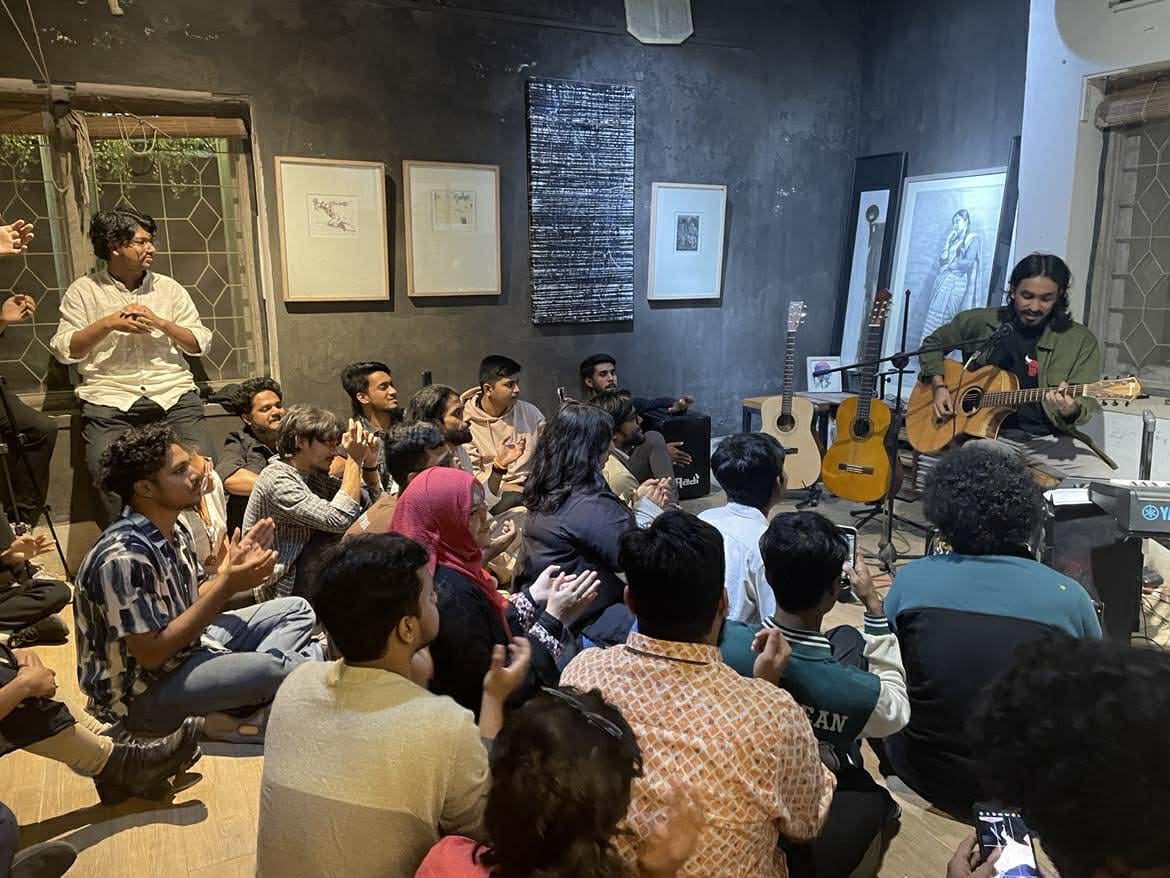
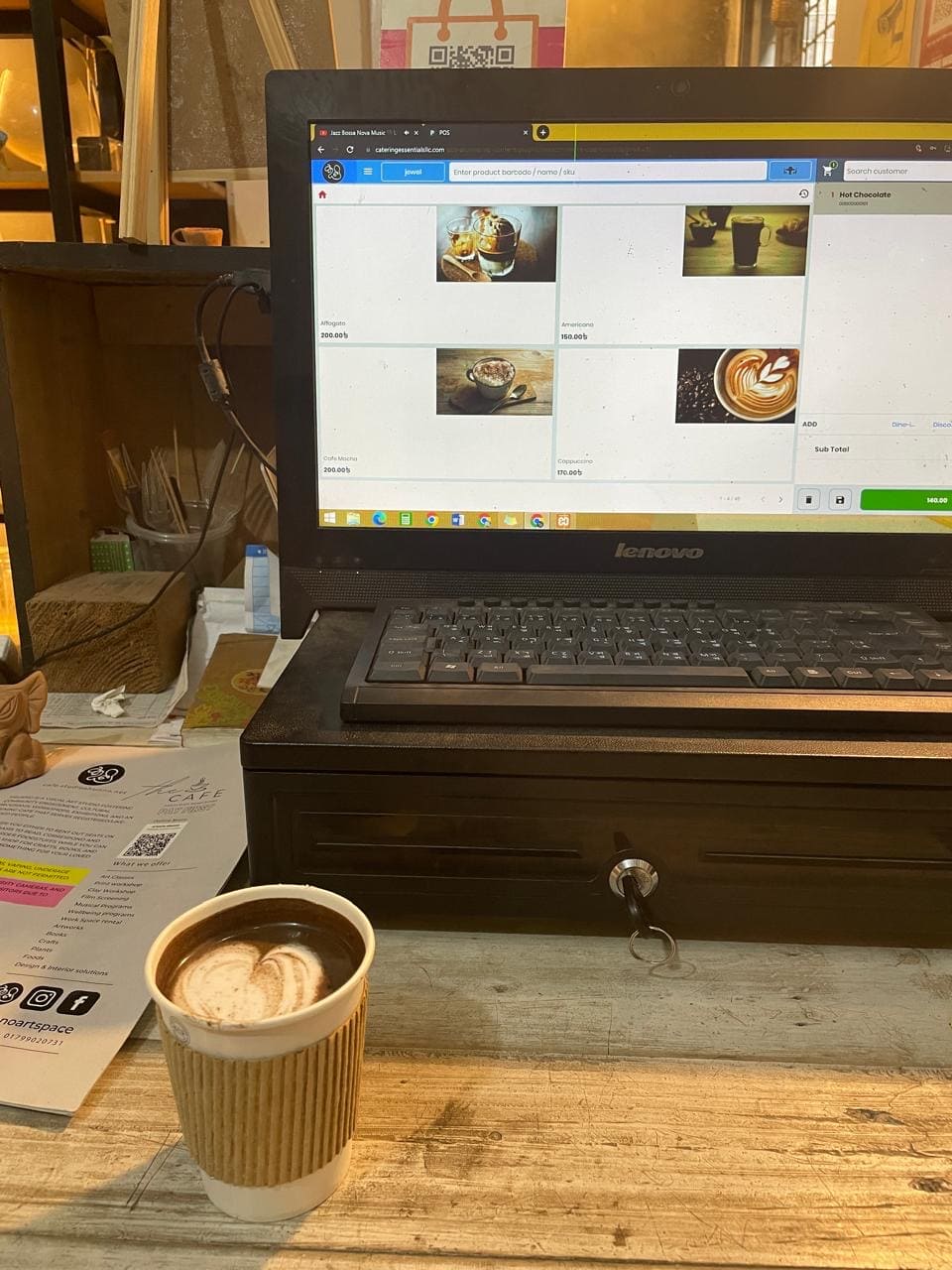
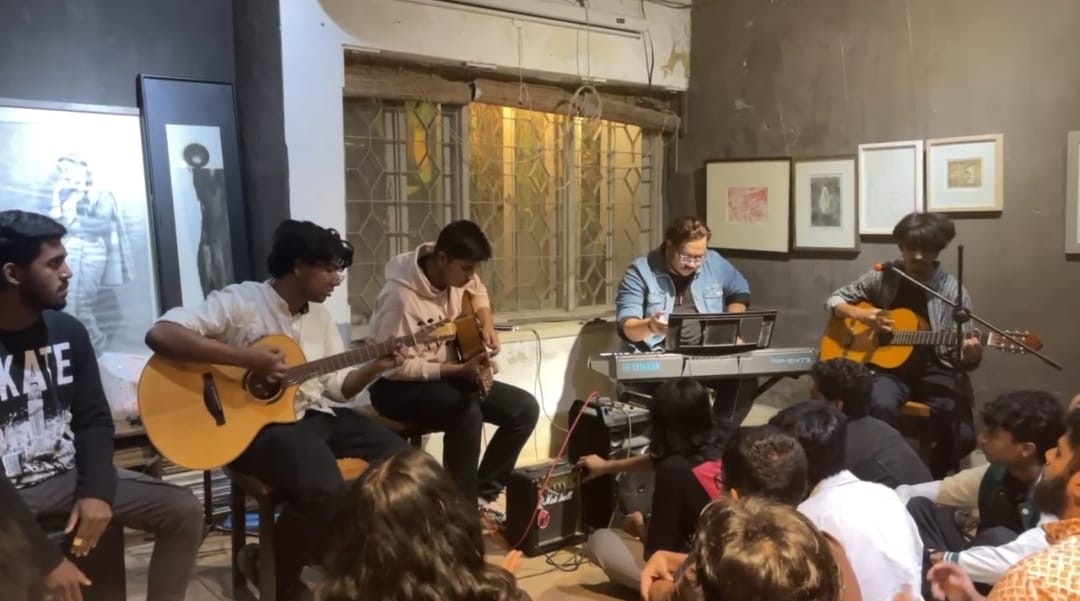
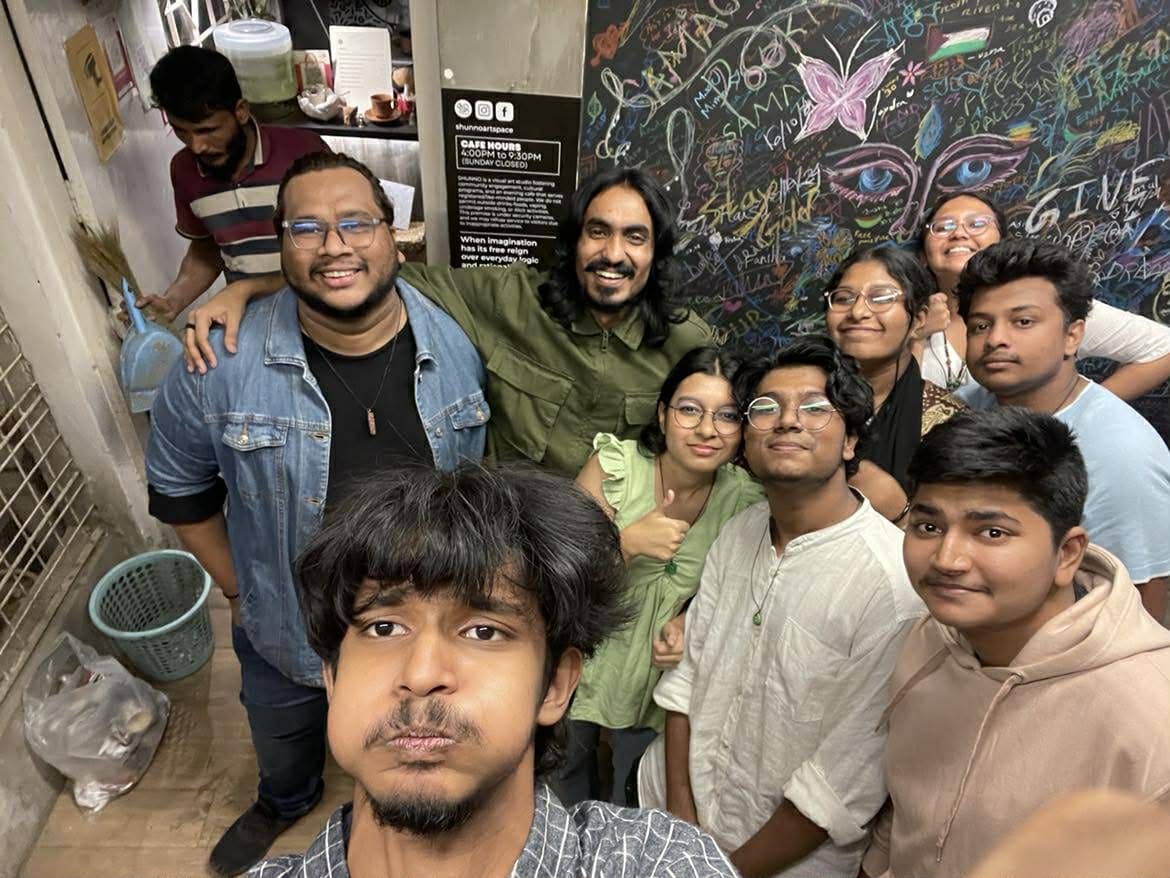
The programme featured four independent acoustic performances. The event operated as a ticketed, limited-capacity session within the café setting. Guest flow and hospitality were managed alongside live performance logistics. Operational oversight extended to both front-of-house coordination and café accounting.
Process as exhibition
TRACING THE DISTANCE
17 TO 24 JANUARY 2025
“Tracing the Distance” was a solo residential exhibition by Sanjid Mahmud, rethinking the traditional separation between studio and gallery. Rather than presenting completed pieces, the space opened with blank canvases, allowing visitors to witness the gradual transformation of thought into form over the course of the week.
I supported the installation of the initial canvases, shaping the spatial framework before the residency began. During exhibition hours, I engaged visitors in dialogue around the evolving process and helped sustain the exhibition’s open, participatory atmosphere. I also assisted in coordinating the closing gathering marking the culmination of the residency.
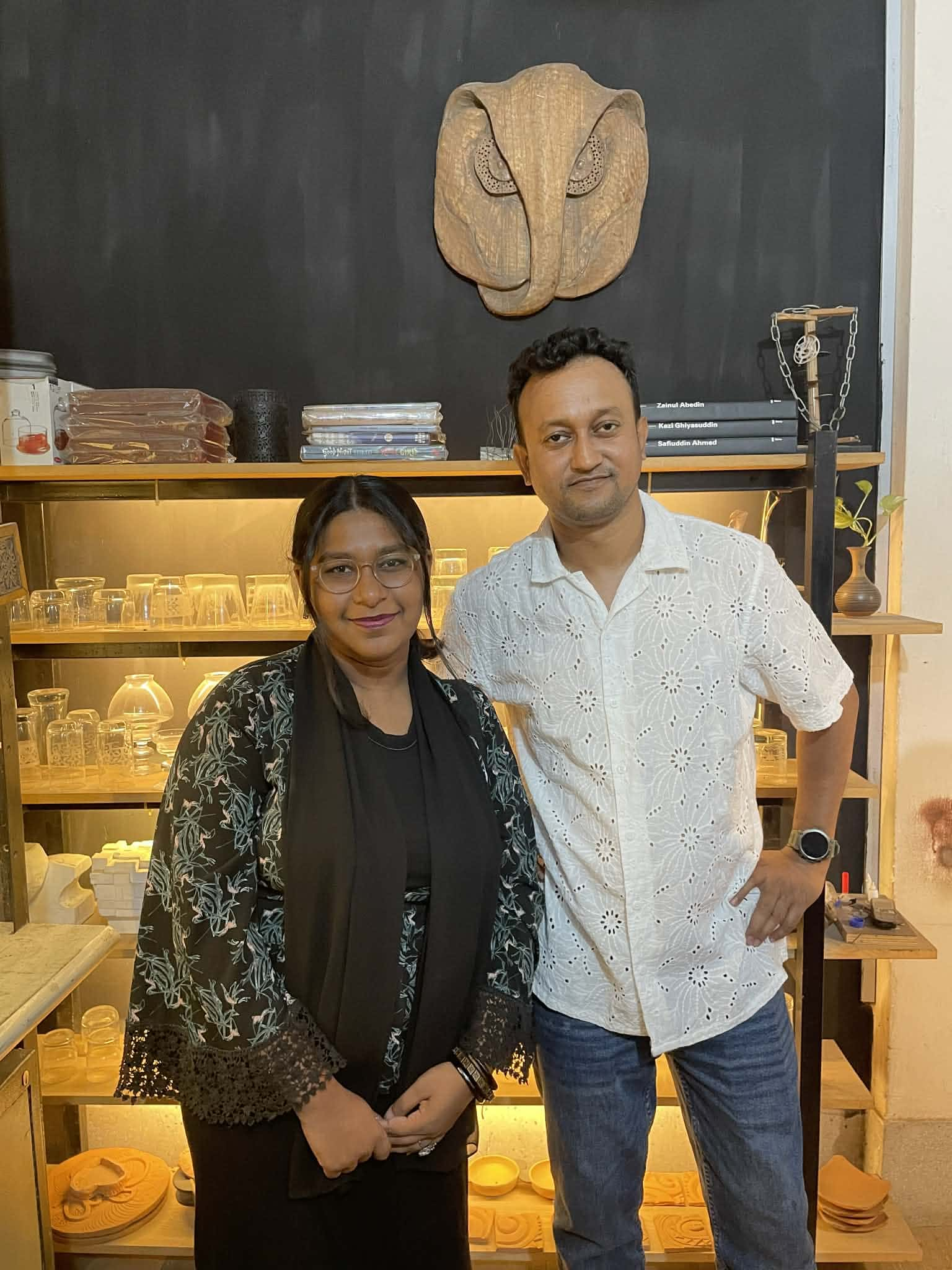
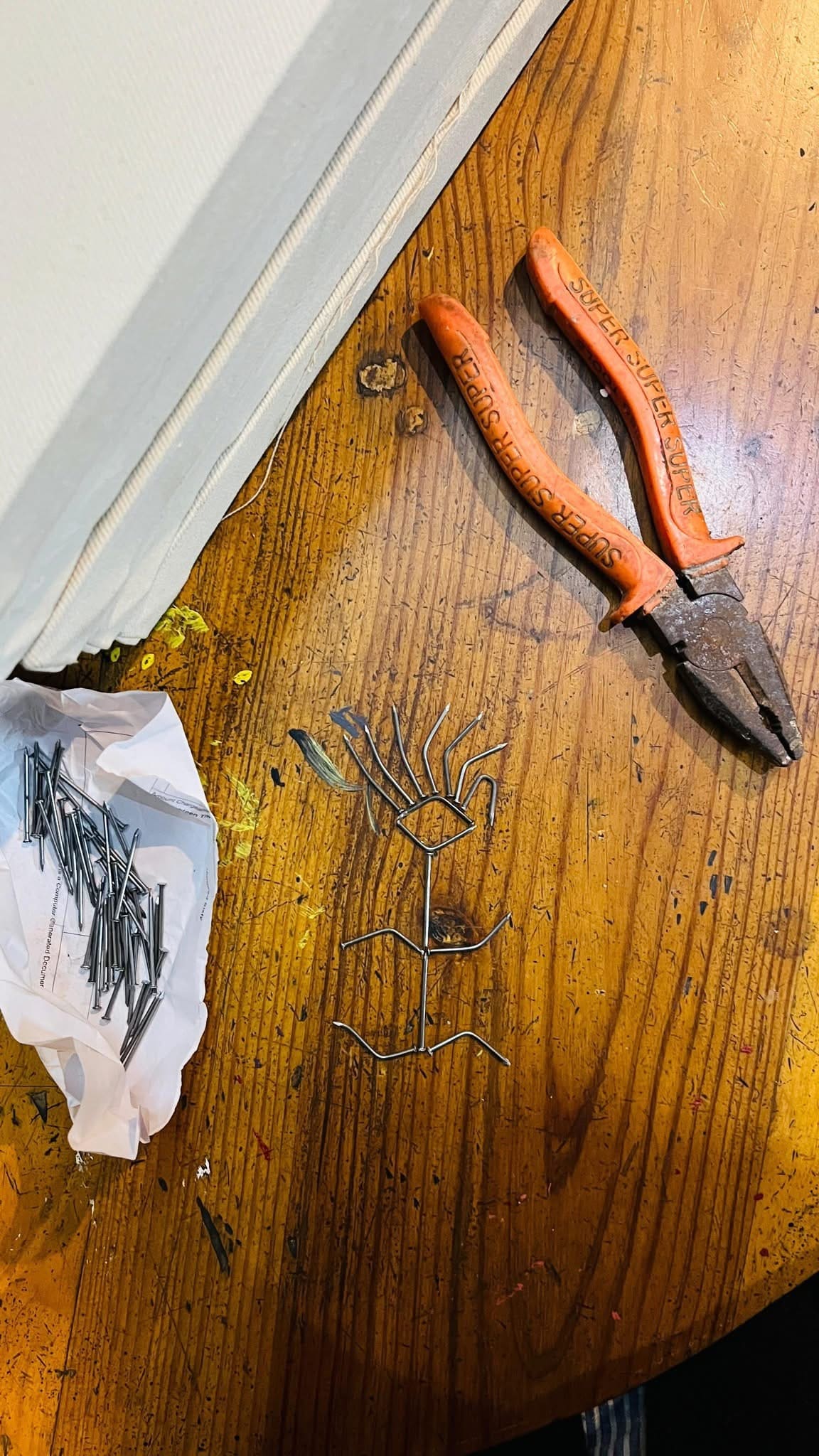
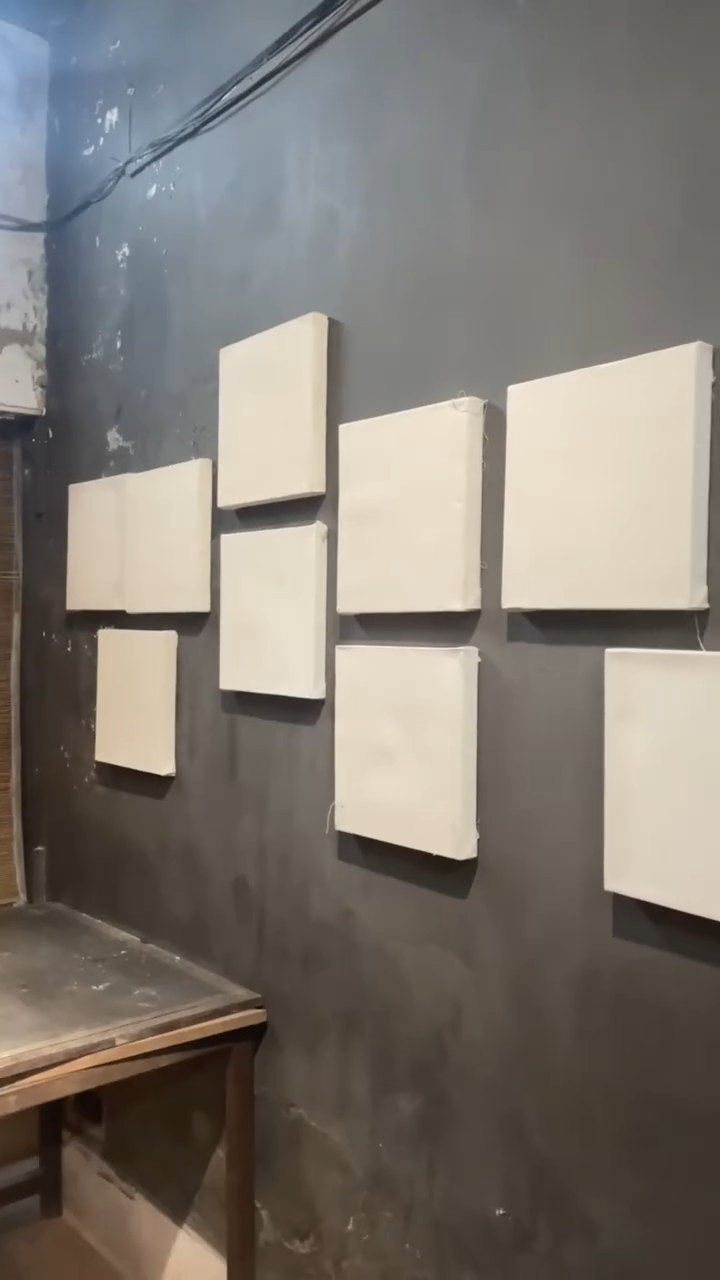
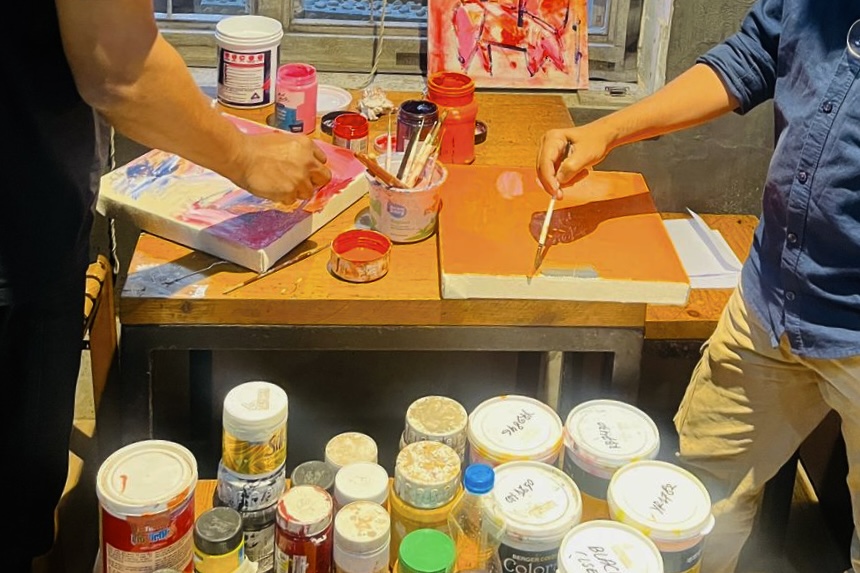
The exhibition unfolded across a week-long residential format. The artist worked publicly within the gallery environment. The exhibition space functioned as an active site of creation rather than static display. Audience interaction was integrated into the structure of the programme.
A multi-day Bengali New Year celebration
Boishakhi Byanjana
14 TO 17 april. 2025
“Boishakhi Byanjana” unfolded as a four-day celebration blending food, workshops, music, and curated stalls within the Shunno Art Cafe environment. Designed as a slow and immersive New Year gathering, the programme combined hands-on creative sessions, traditional cuisine, live performances, and small-scale artisan showcases.
Working within a team of three, I was involved from conceptual planning through execution and wrap-up. I contributed to programme structuring, coordinated workshop logistics, and supported overall event management across all days. In addition, I led the visual communication design — developing promotional posters and carousel materials, producing workshop documentation videos, and editing media content for public release across Shunno’s platforms.
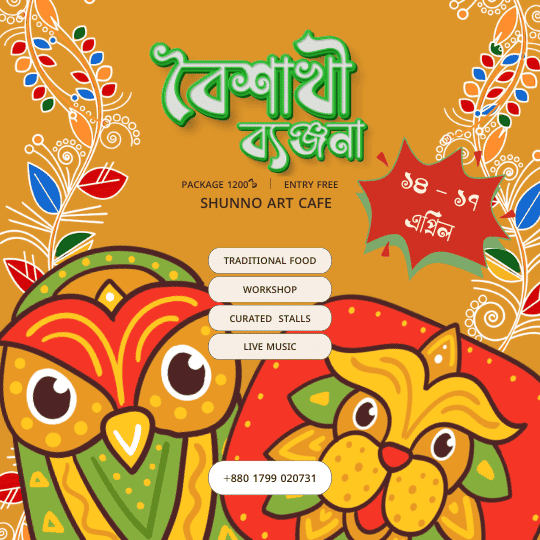
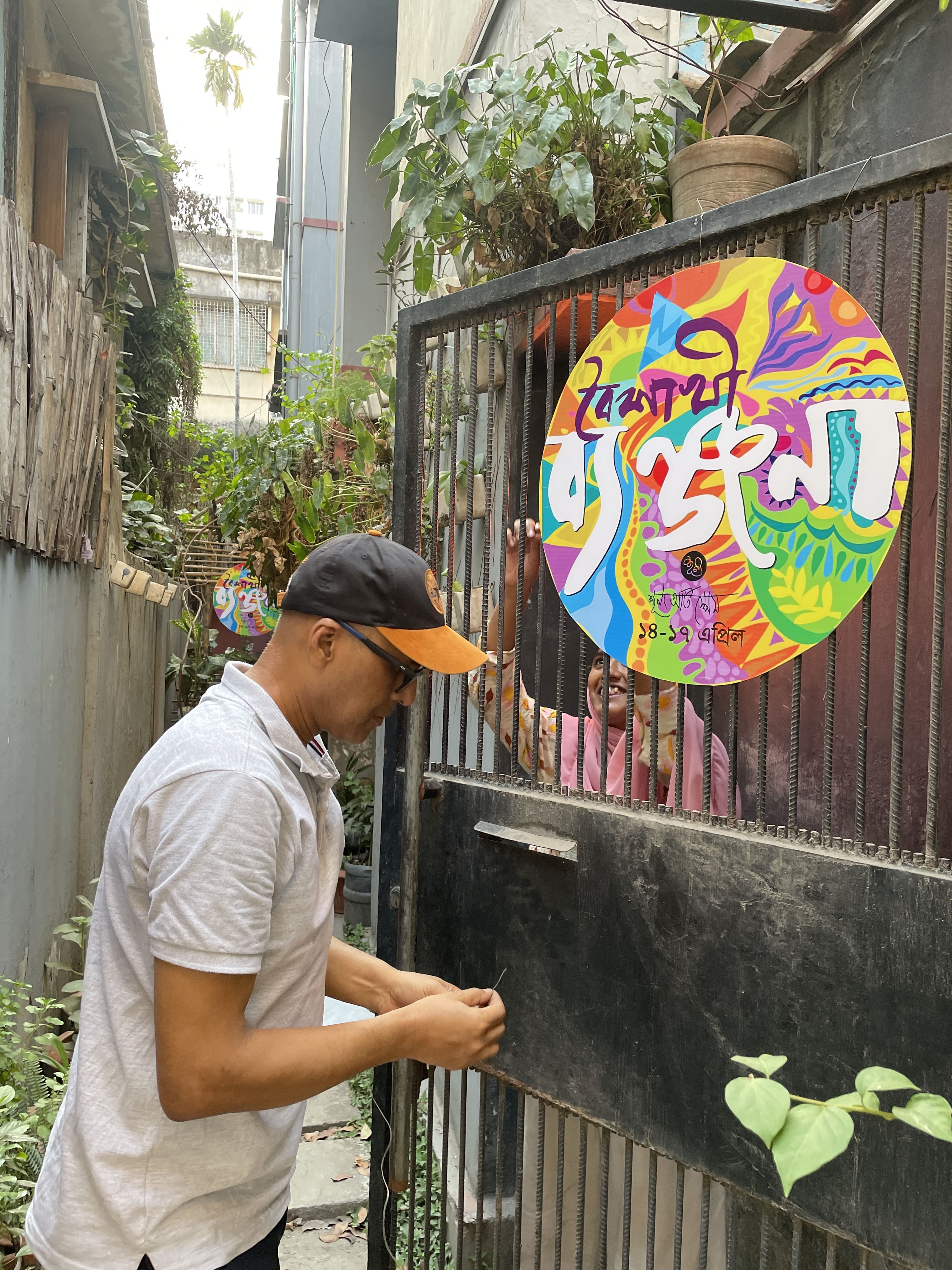
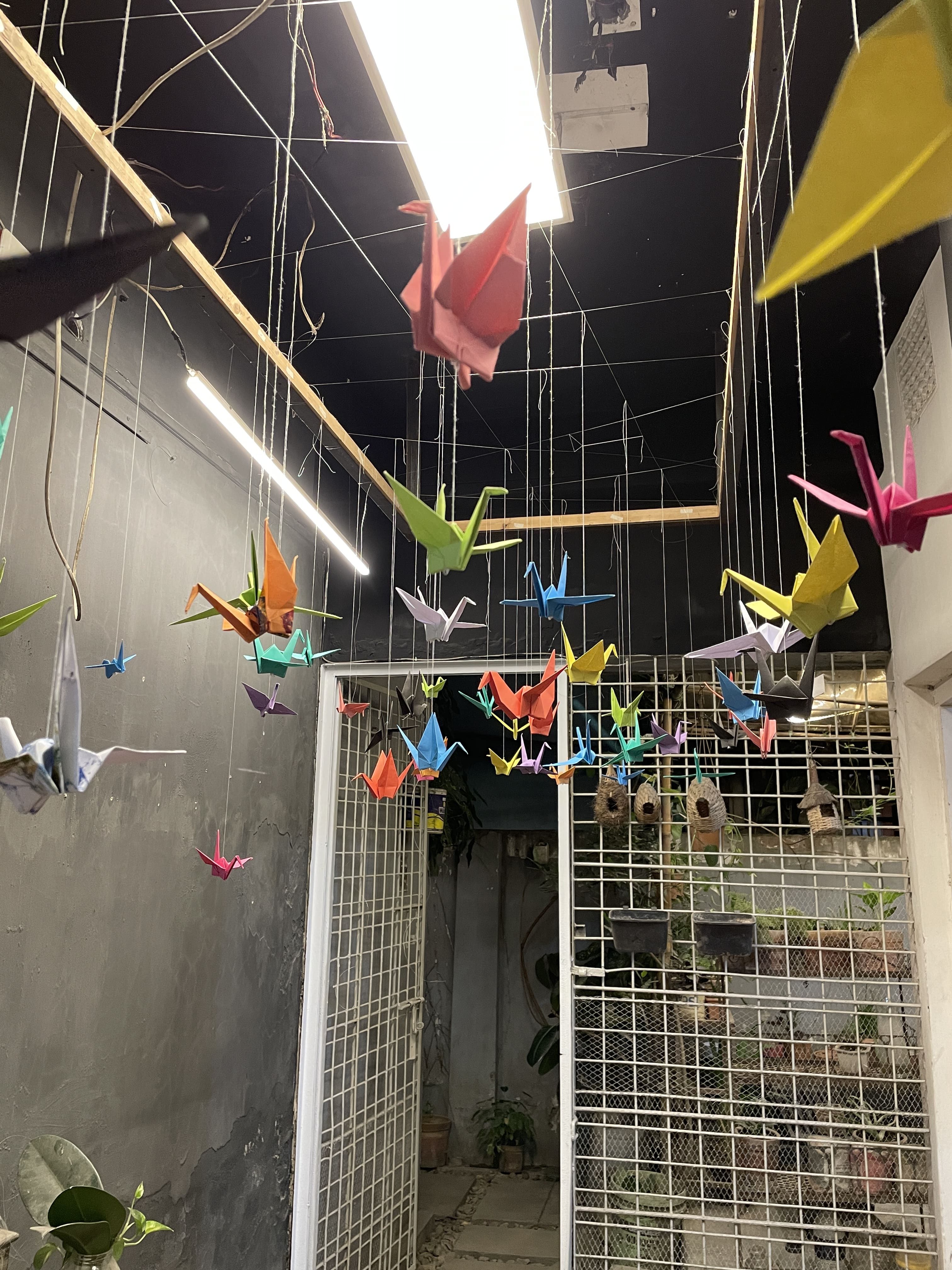

The celebration spanned four consecutive days in April, beginning with a full-day New Year programme. Activities included mask painting, clay sessions, open painting workshops, curated artisan stalls, live music, and traditional food service. A pre-booked cultural package combined dining and workshop participation. Event communication and promotional media were produced internally as part of the planning process.
AFTER THE SPACE
Shunno has been less about “assisting programs” and more about learning how a space breathes.
