Community Engagement Associate (Volunteer)
Chalantika Mobile studio
Practice Type
Community-based
Focus
Participatory art,
printmaking, youth workshops
Duration
February 2023 — Present
Project overview
Chalantika is a traveling community art initiative taken by Shunno Art Foundation, working across remote and urban areas. Through participatory workshops, it opens discussions on collective expression, well-being, sustainability, and climate - shaped by movement, place, along with individuals.
My role
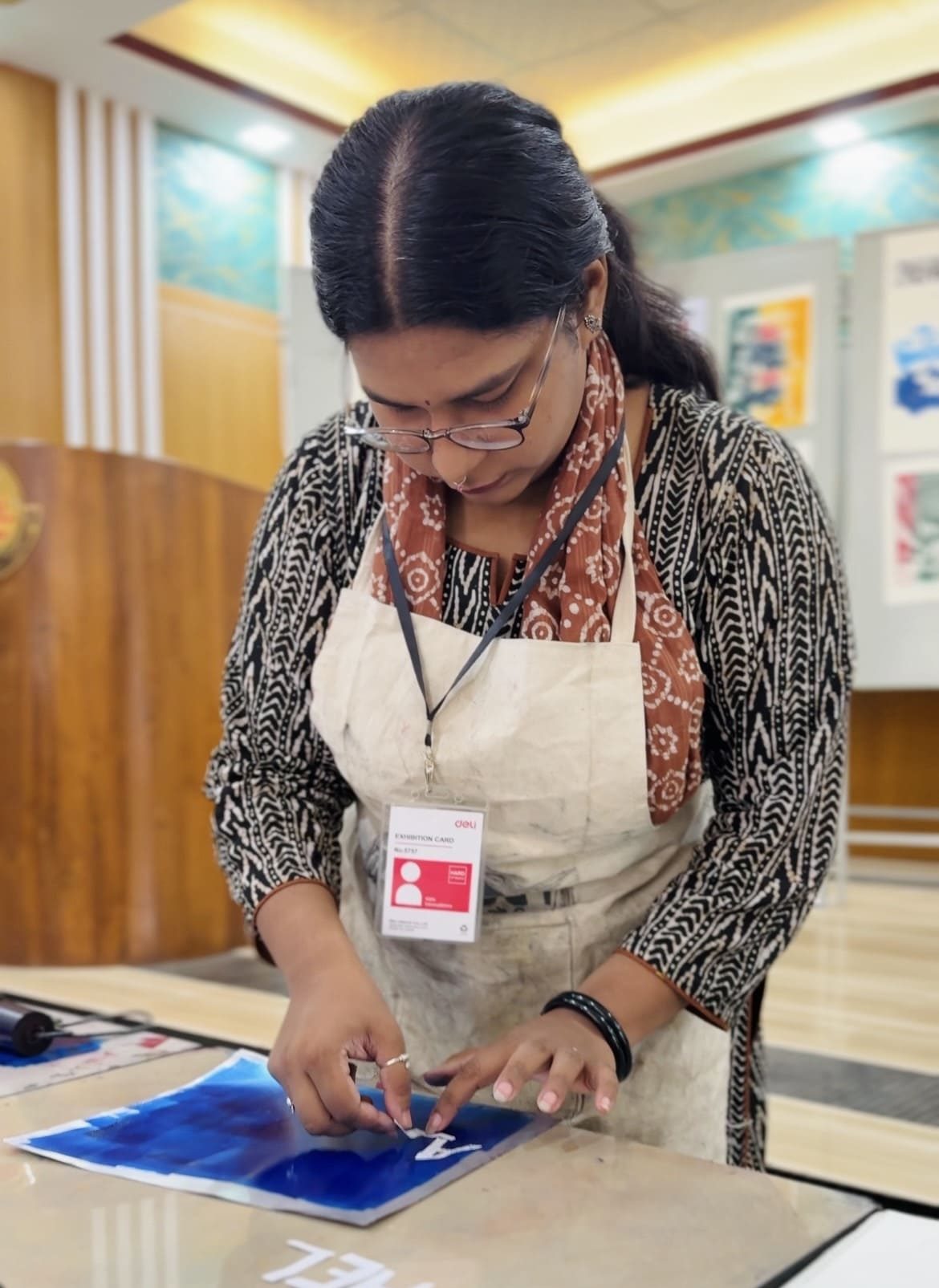
As a Community Engagement Associate (Volunteer) with Chalantika Mobile Studio, I support and facilitate printmaking based workshops, working closely with young participants through strong communication, guided discussion, and contextual adaptation. My role centers on attention, clarity, and making participatory learning accessible across different communities.
ACROSS DISTRICTS
With Chalantika, I traveled across 7 districts, working closely with youth and local communities through mobile workshops. Many participants have been engaging with paint and printmaking for the first time. Instead of treating materials as tools to learn, we used them as a way to open conversations - about environment, everyday routine, and also shared concerns rooted in their own surroundings.
Each location shaped precisely how sessions unfolded. Activities shifted with local context, access, and age, letting creative making to be a space for discussion, reflection, and collective expression.
Here, paint became a better way of speaking - particularly for individuals who had never held it in the past.
Traveling across seven districts
Working with mostly first-time art participants
Using creative practice to discuss environmental and social themes
Environmental awareness through printmaking and collective action
MANIKGANJ
11 TO 13 FEBRUARY. 2024
Workshops in Manikganj were held at Golaidanga High School and Golaidanga Muktijoddha Smriti College, engaging students with limited prior exposure to art materials or climate-related discussions.
Using printmaking as a medium, participants explored five key themes of climate change through monoprinting and simple stamp techniques. My role involved coordinating registration, introducing concepts and techniques, and supporting participants throughout the sessions.
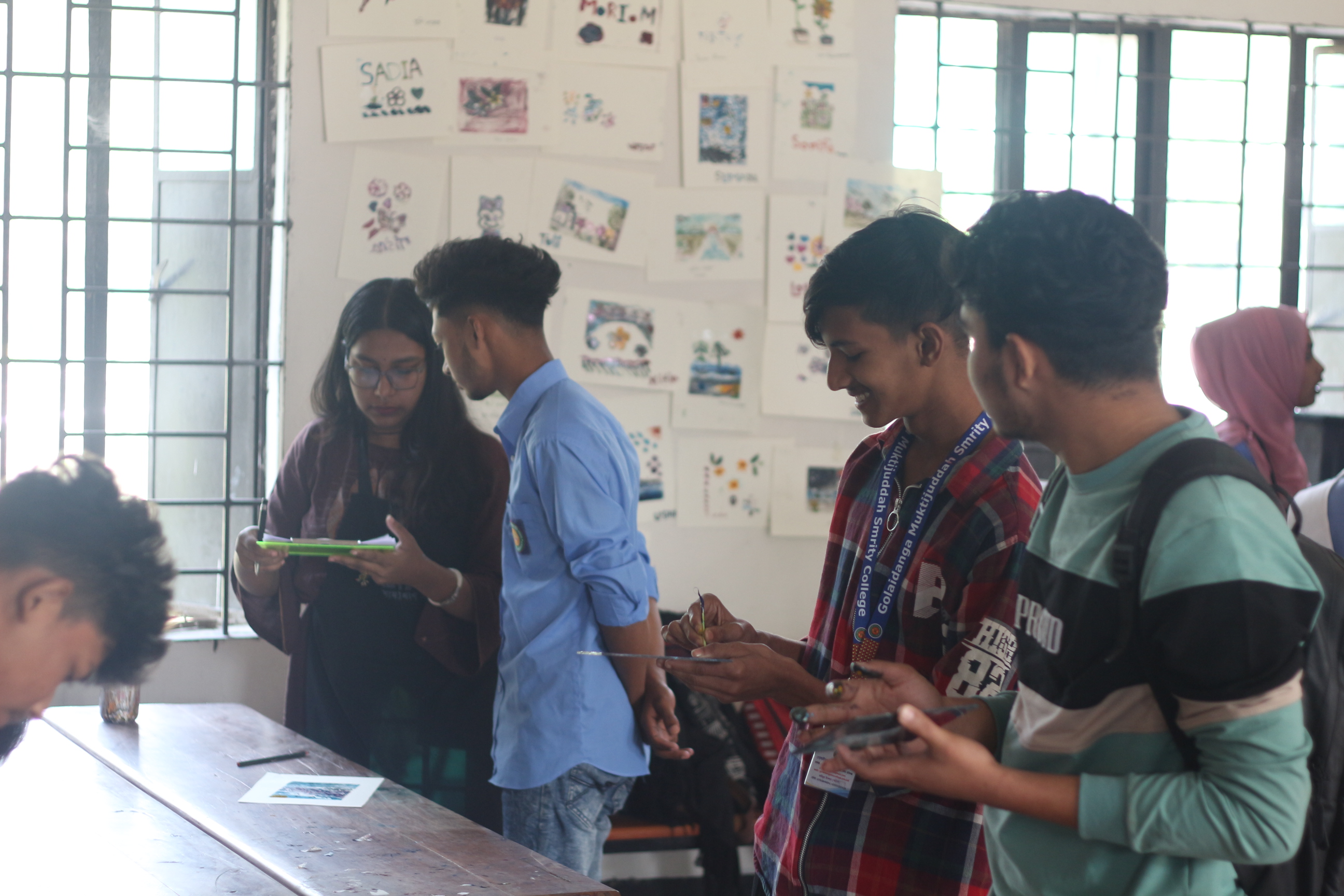
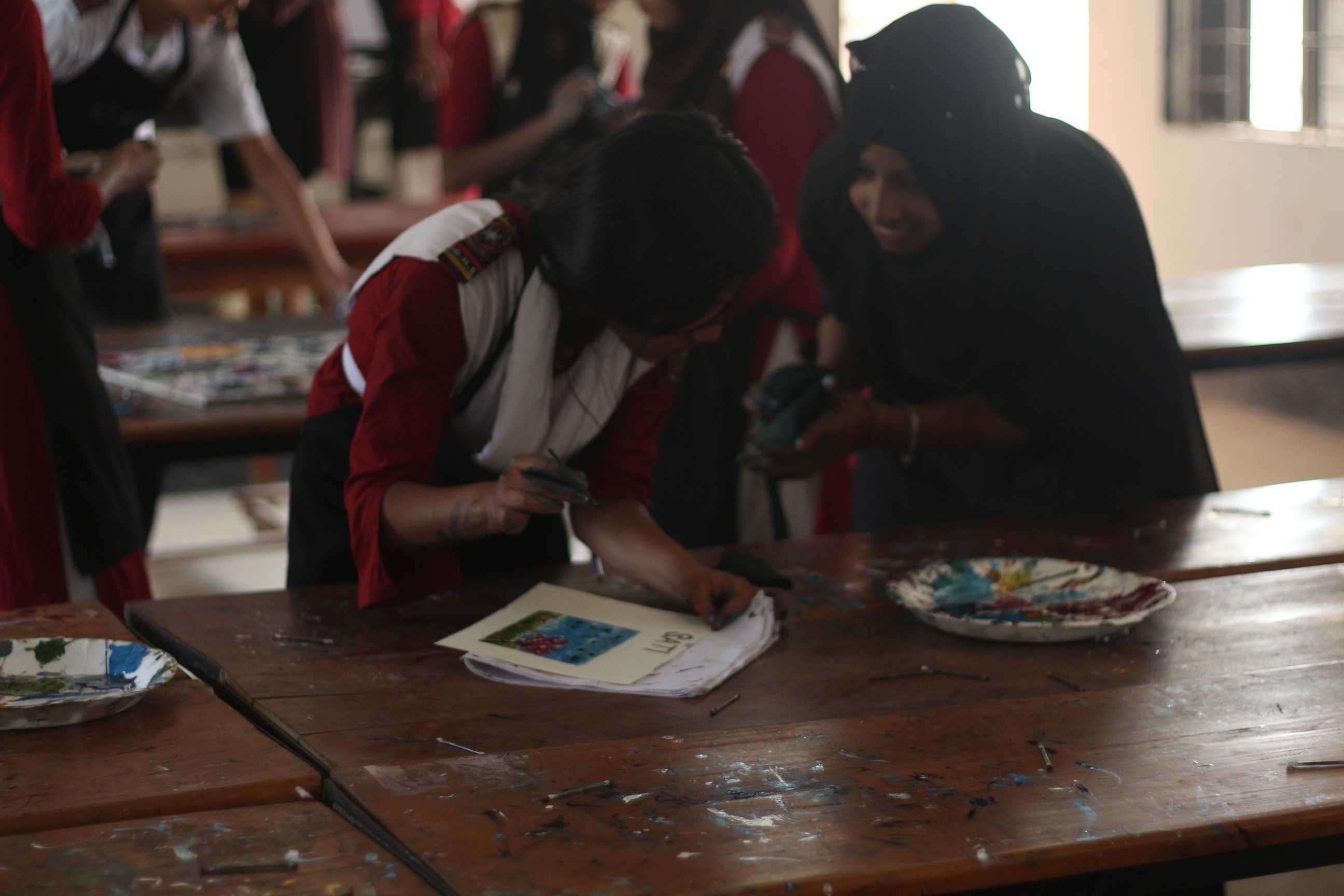
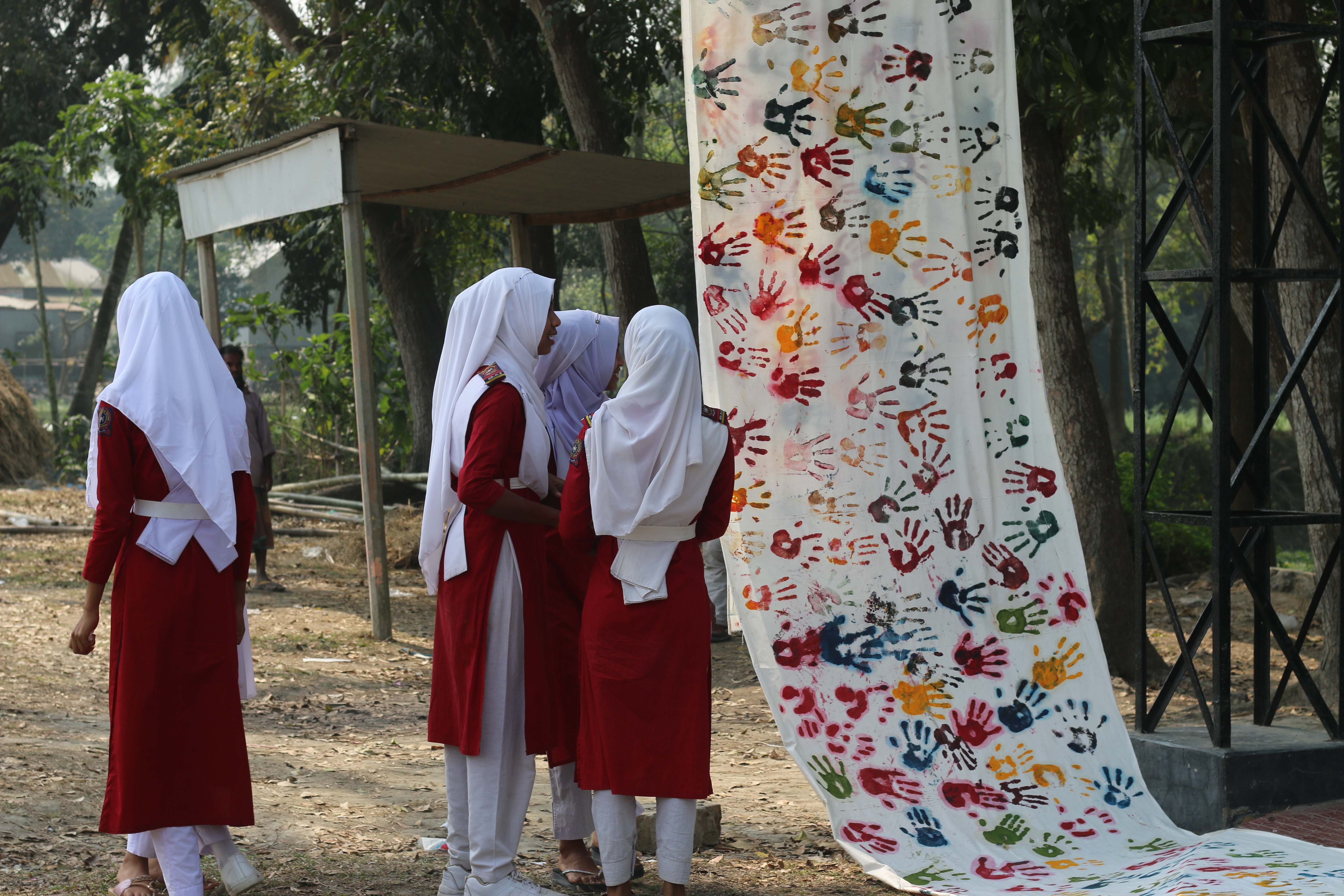
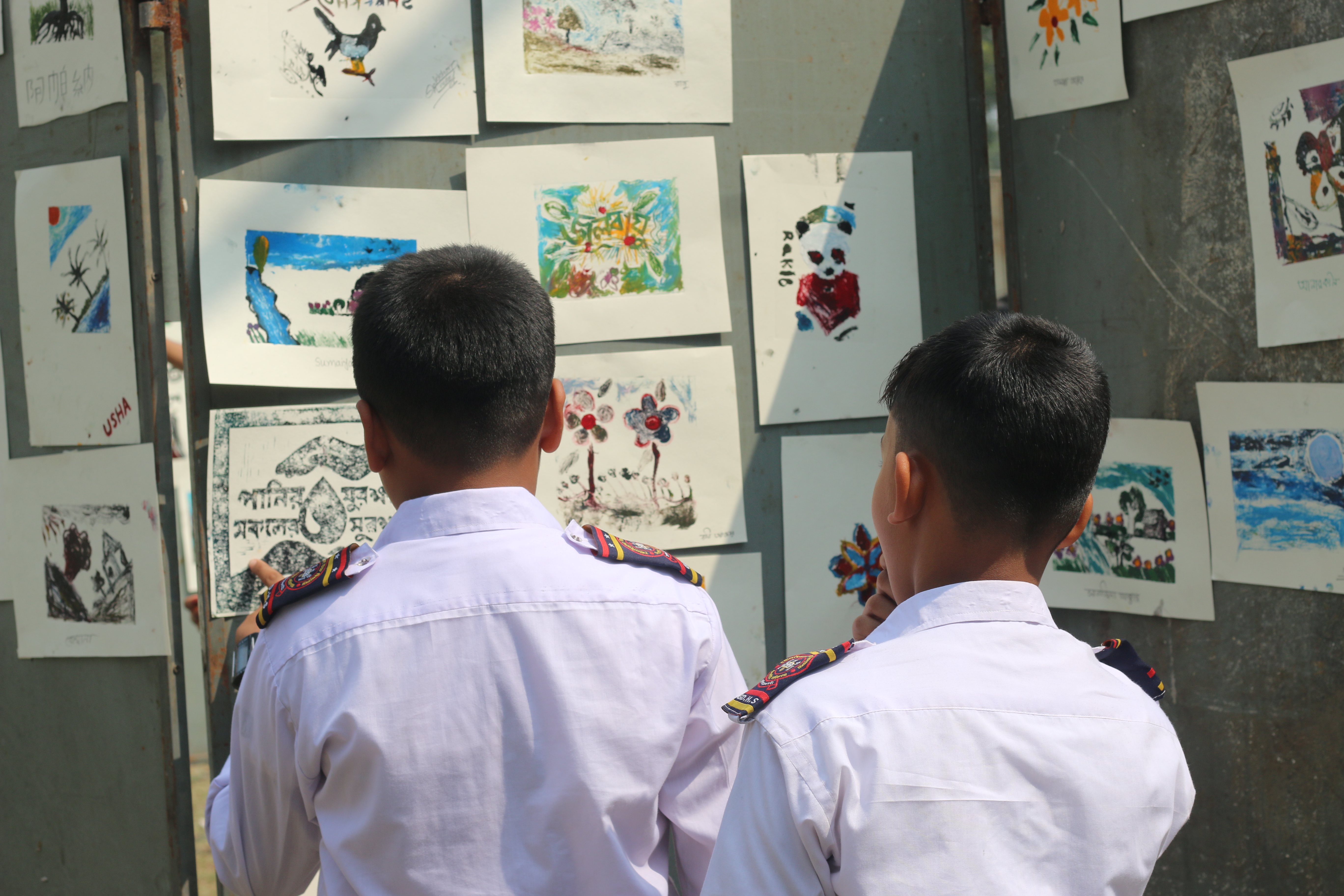
The engagement ran for three days, with four two-hour sessions each day, reaching 200+ students daily and over 400 students on the final day. The process concluded with an open exhibition showcasing works produced during the workshops.
Climate change and environmental preservation awareness among youth
SAVAR
5 JUNE. 2024
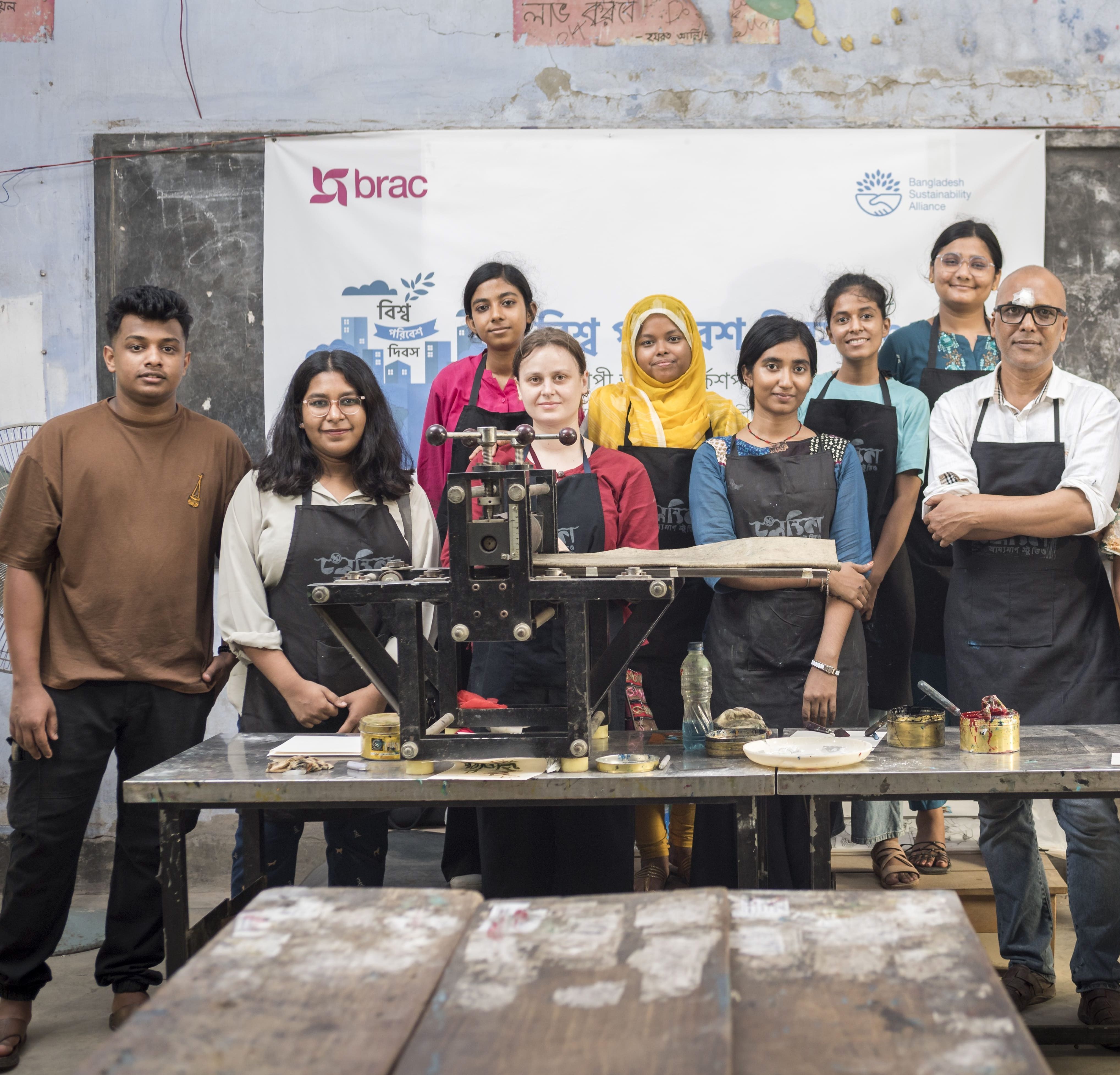
The workshop took place at Savar Government College on World Environment Day, supported by Bangladesh Sustainable Alliance (BSA) and BRAC. The programme combined printmaking, painting, discussion, and tree plantation to engage students in conversations around plastic pollution and environmental responsibility
I coordinated participant registration and workshop flow, transitioning the system from paper-based forms to digital Excel tracking and introducing token-based registration to manage scale. I supported participants throughout the sessions, ensuring clarity, accessibility, and smooth coordination.
300 students participated from six schools and one college. The programme included a full-day painting and printmaking workshop, followed by discussion sessions and plantation activities. Students registered by submitting plastic waste, linking participation directly to environmental action. The event concluded with sapling distribution and a community cleanliness initiative.
Bhashajog: Celebrating the Expression of Language through Printmaking
Dhaka
13 TO 21 JUNE. 2025
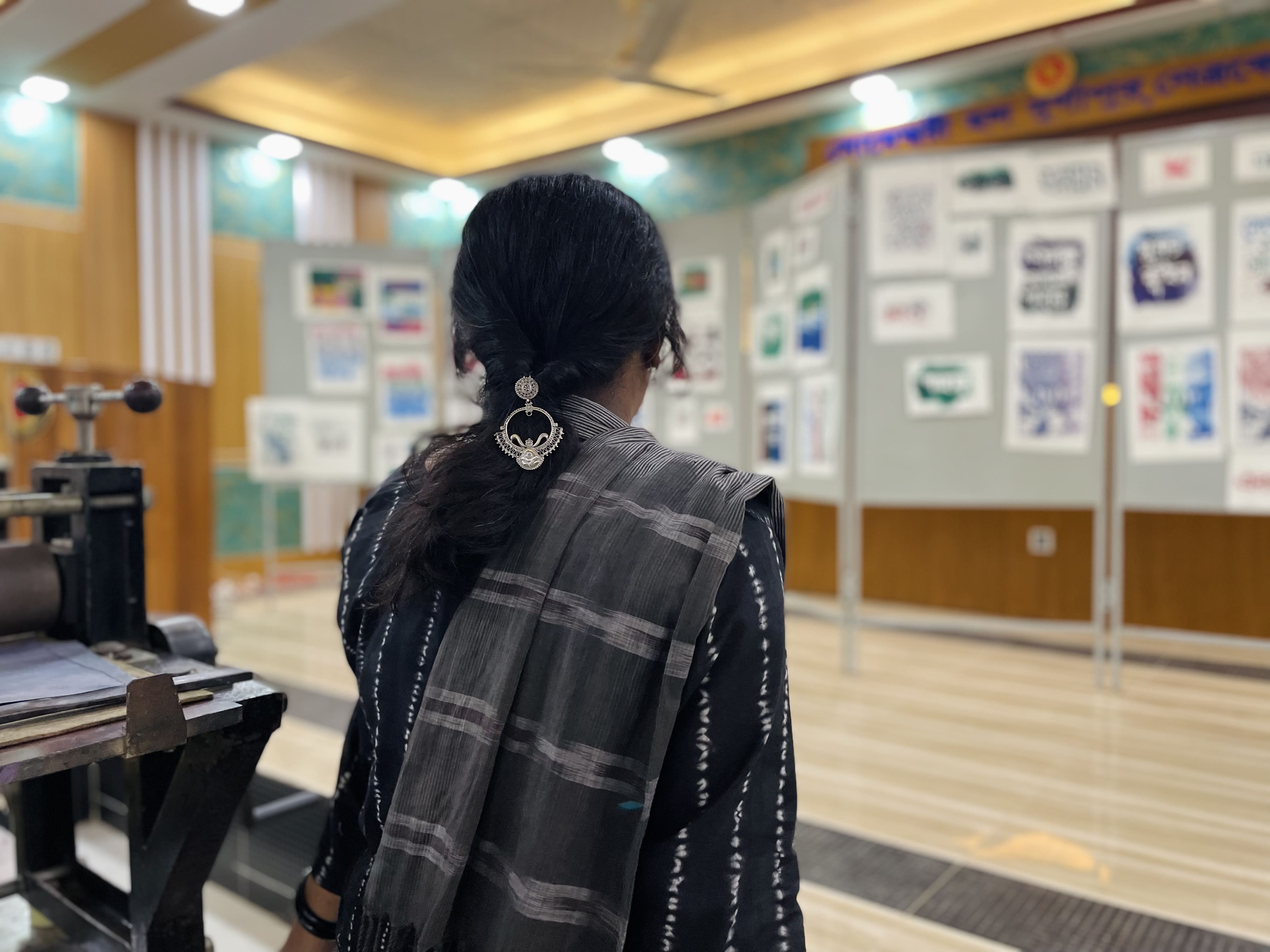
The engagement was organised by the Fine Art Department, Bangladesh Shilpakala Academy, and implemented by Shunno Studio and Chalantika Travelling Studio at the National Art Gallery Plaza, Shegun Bagicha, Dhaka. The project explored linguistic diversity and expression through printmaking.
Given the scale and limited session capacity, my role focused on digital coordination and participant management. I worked closely with the web developer to collaboratively launch chalantika.org for handling registrations. I also conducted one-on-one communication with pre-registered participants to assess their interest and intent before granting access to book sessions, ensuring that participation aligned with the project’s focus.
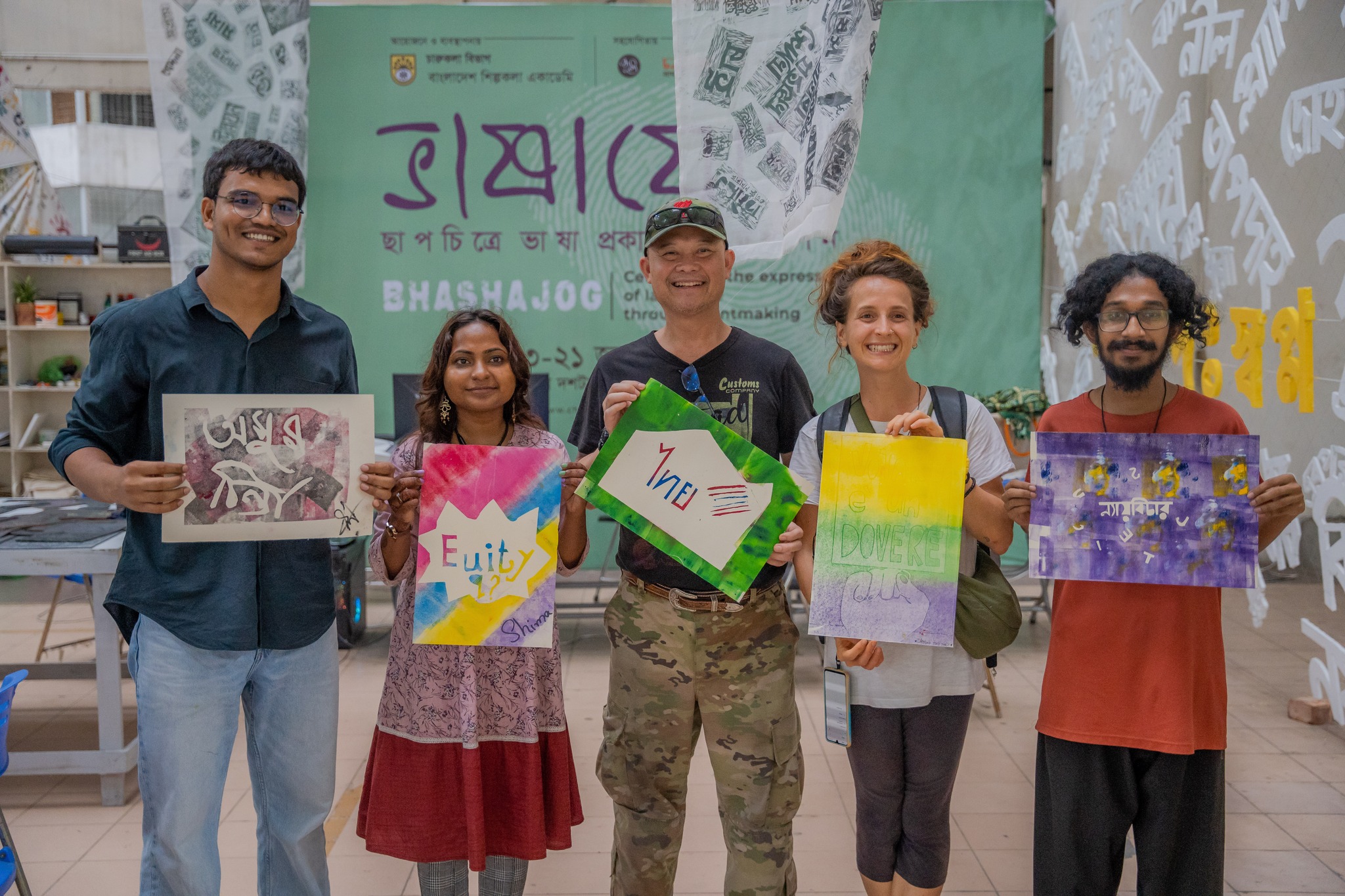
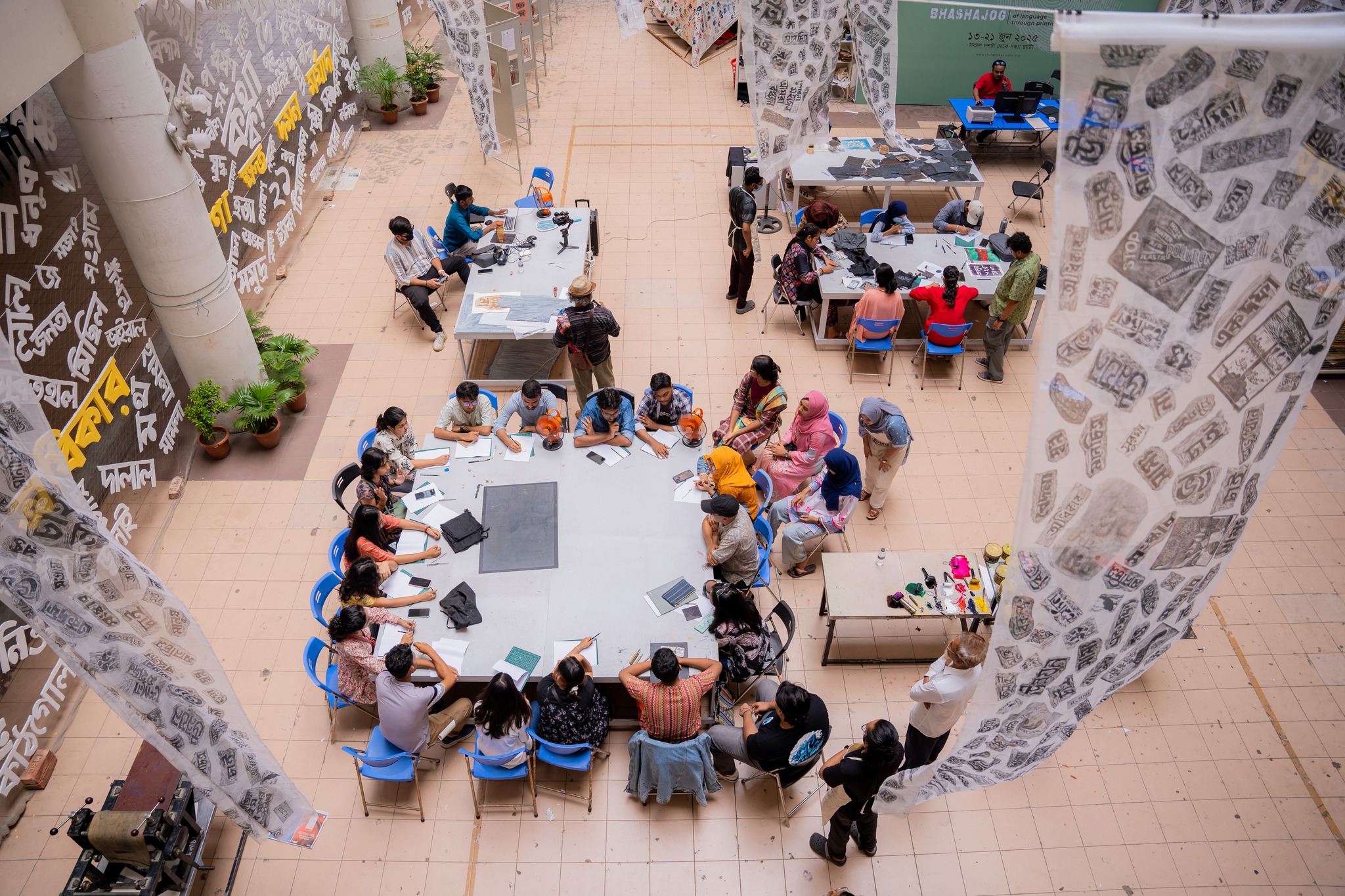
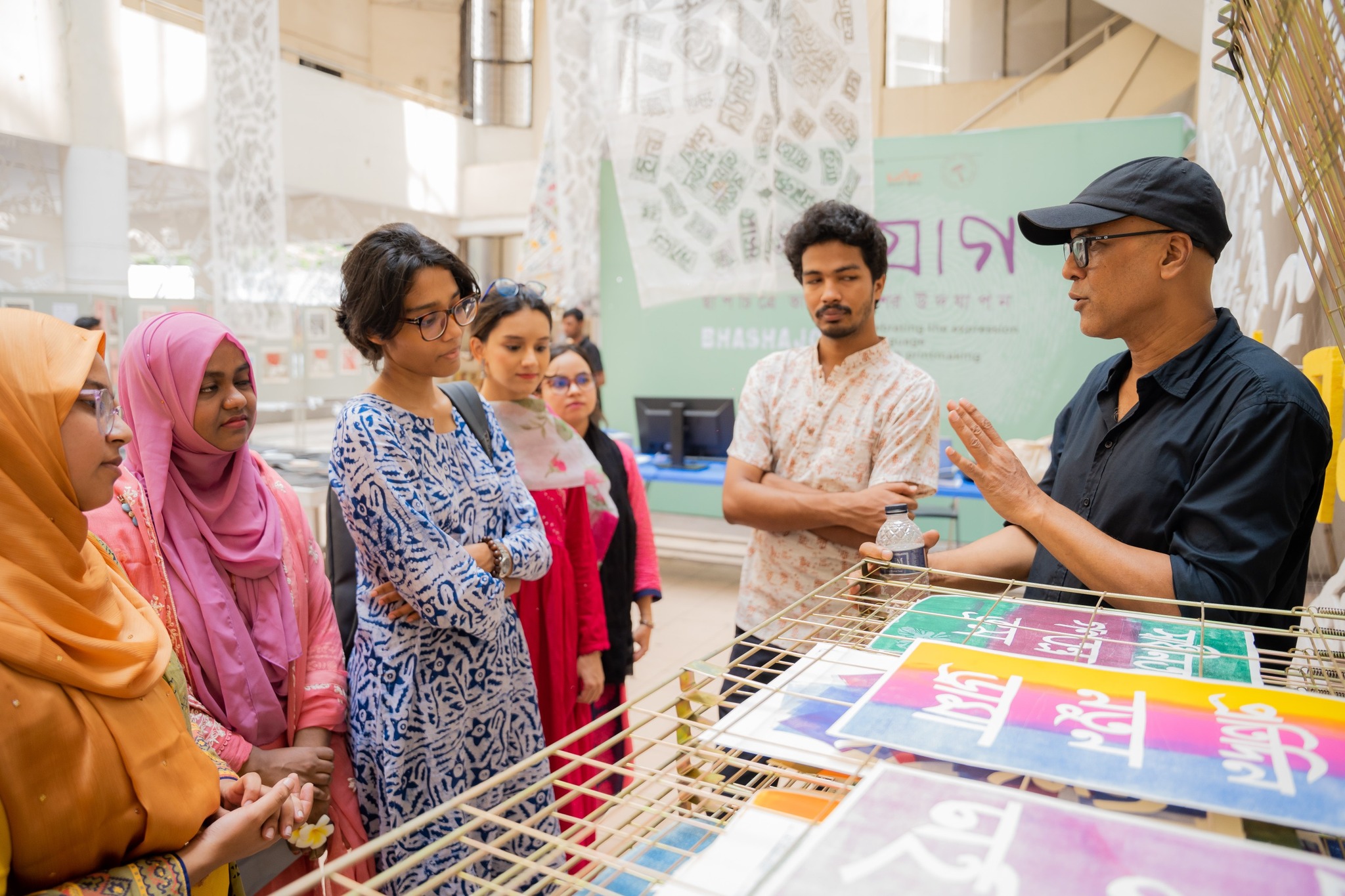

The programme ran for nine days. Each day included four sessions, with 20 participants per session. Around 80 participants were accommodated daily through a pre-screened registration process. The workshop formed part of a nationwide printmaking initiative by Bangladesh Shilpakala Academy.
Bhashajog - Language as collective expression through printmaking
BIRISHIRI
18 TO 19 OCTOBER
The Birishiri engagement focused on celebrating local languages and cultural expression, particularly within Garo, Hajong, and surrounding communities. Implemented by Chalantika Travelling Studio and Studio Shunno, the open-access workshop invited participants to explore their own language, identity, and lived experience through printmaking.
Printmaking was introduced as a shared medium to translate spoken language, memory, and cultural expression into visual form. My role combined digital coordination and on-site facilitation—managing registrations and communication, supporting participants during sessions, and assisting with documentation. With a small four-member team, responsibilities were shared closely, requiring constant collaboration and adaptability.
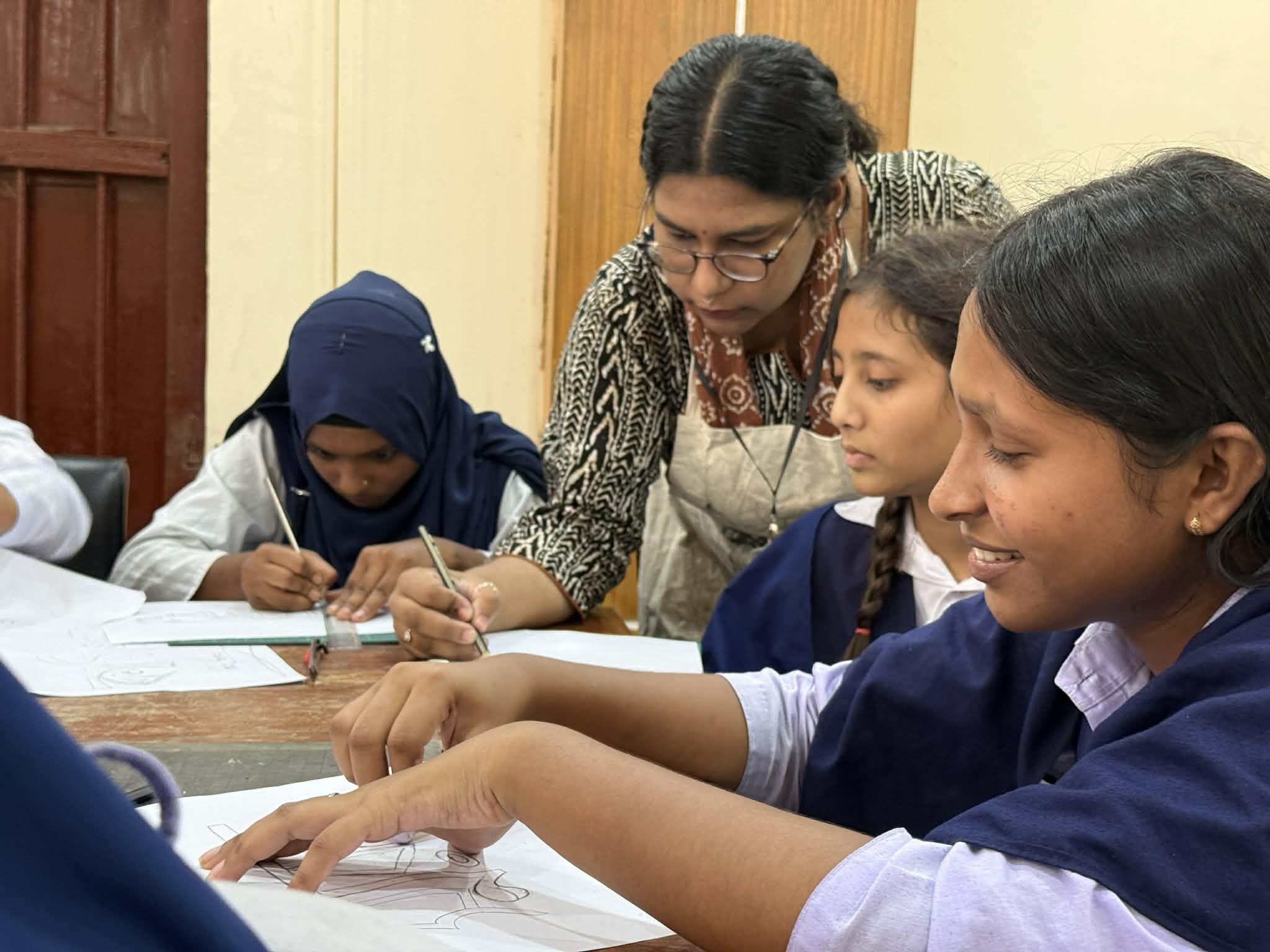
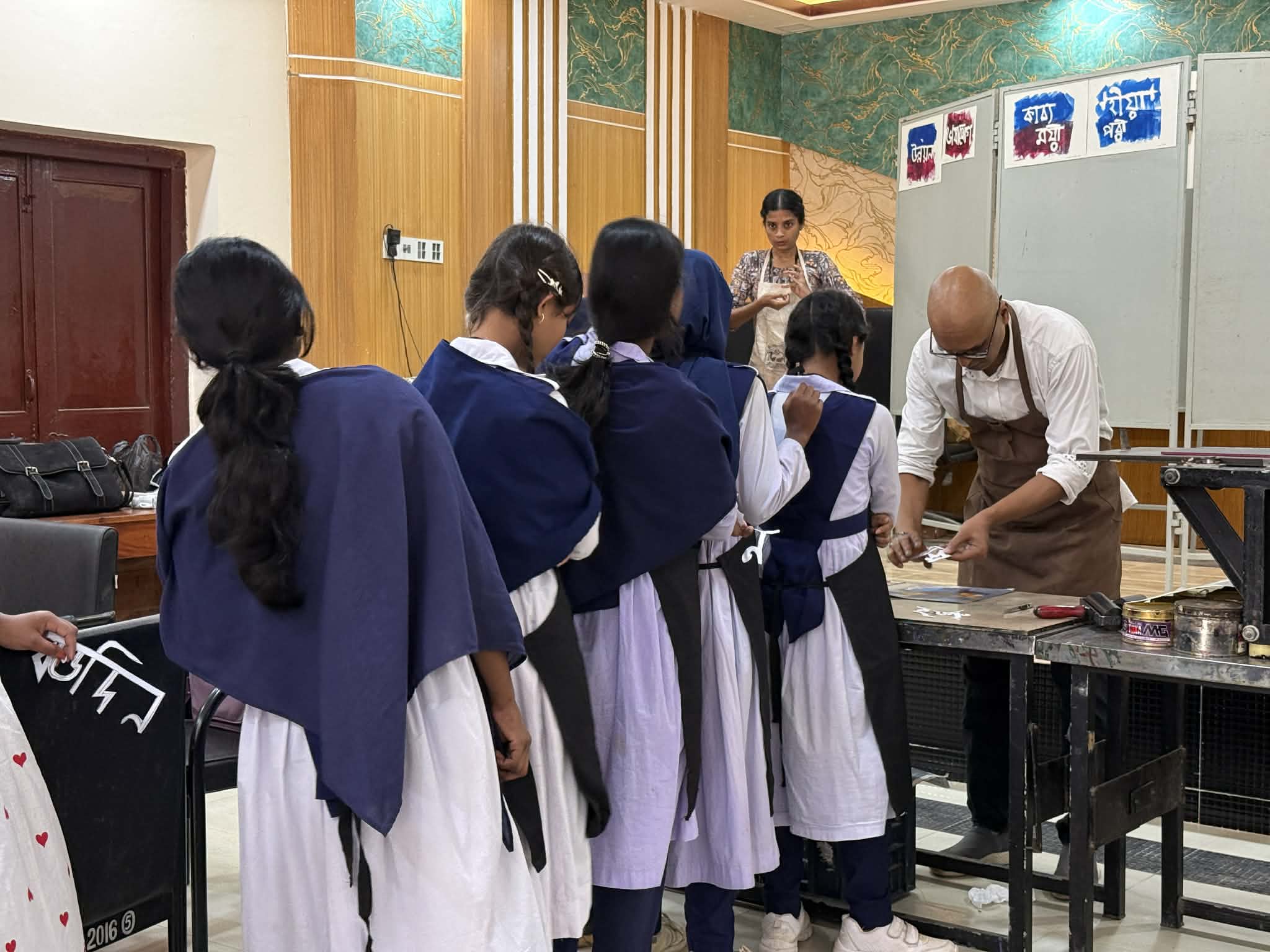
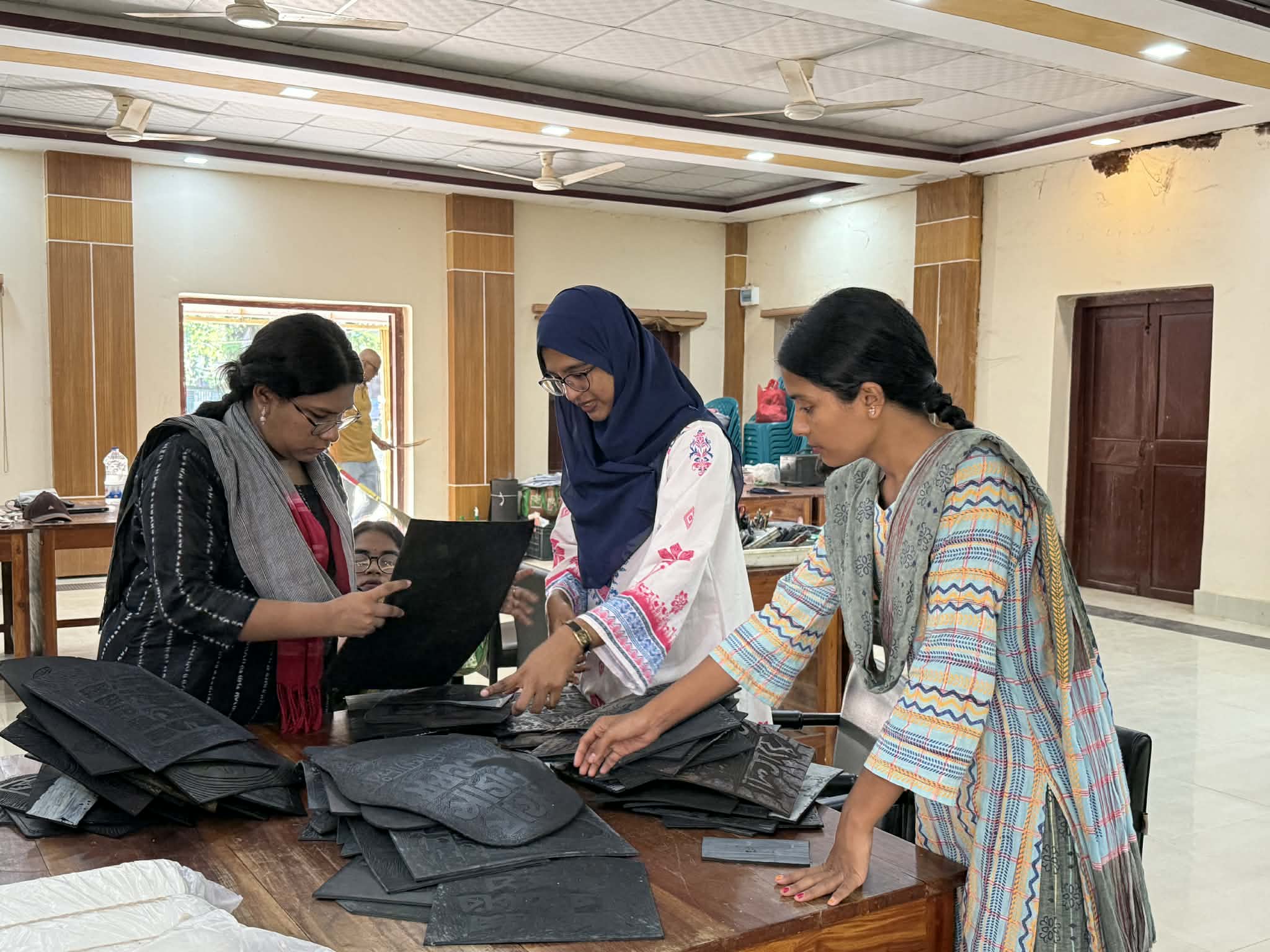
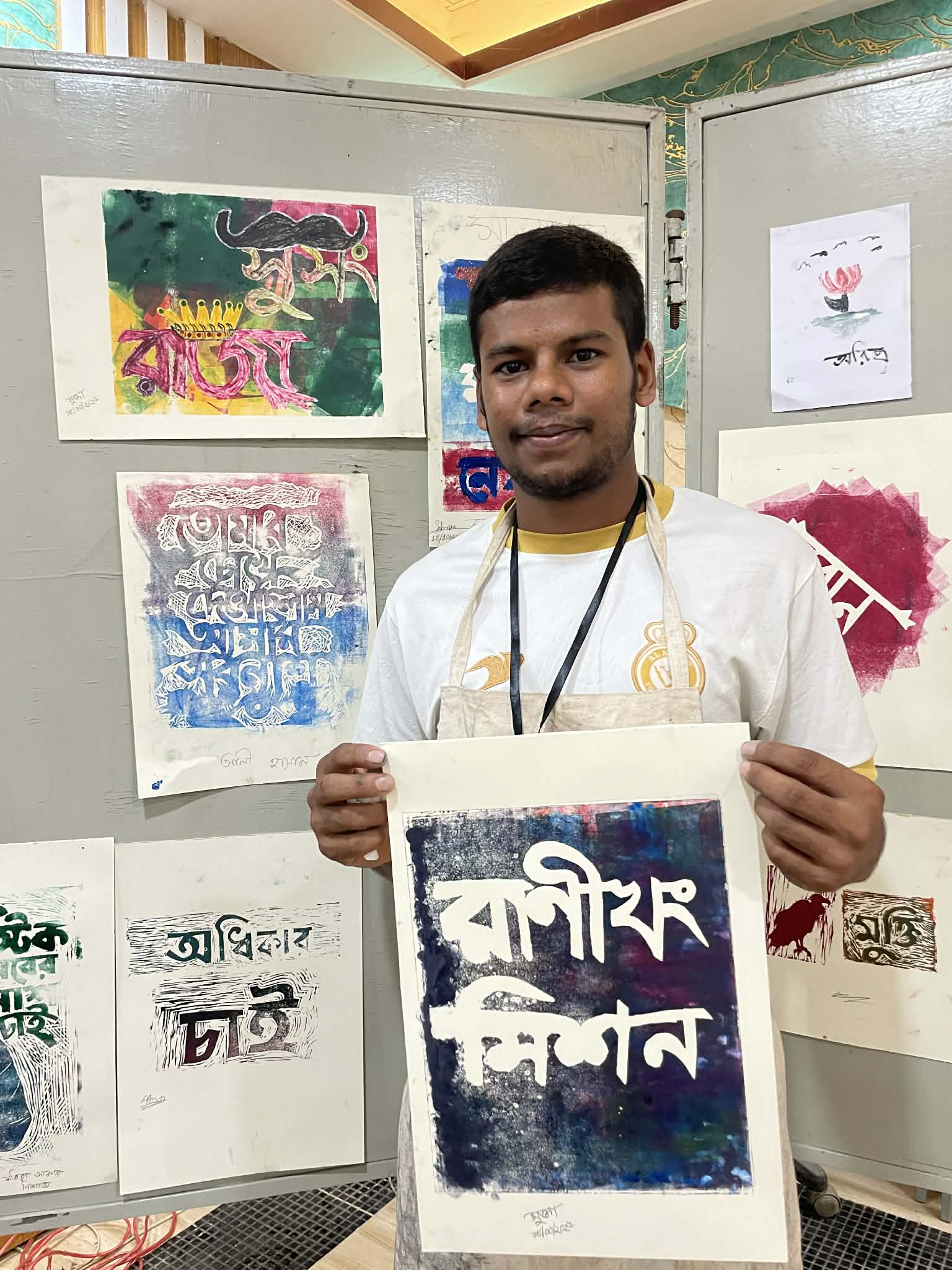
The workshop took place over two days. Sessions were held at the Upazila Parishad Bhaban, Shomesshwari Hall (Durgapur Upazila). Participation was open to all, with limited seats allocated through prior registration. The workshop engaged participants from multiple local communities, using printmaking to reflect linguistic diversity and collective identity.
Bhashajog - Printmaking across languages in the Hill Tracts
BANDARBAN
22 TO 23 OCTOBER
Bandarban marked the first Hill Tracts destination of the travelling initiative, engaging communities including Mro, Marma, Tanchangya, Chakma, Kheyang, and others in the region. Participants translated elements of their own language and cultural identity into printmaking forms.
The core team consisted of four members, working closely across coordination and facilitation. I was actively involved in participant communication, session support, and field coordination throughout the engagement. Documentation was later carried out collaboratively with Mehedi Hasan, who joined specifically to support visual and process-based recording of the workshop.
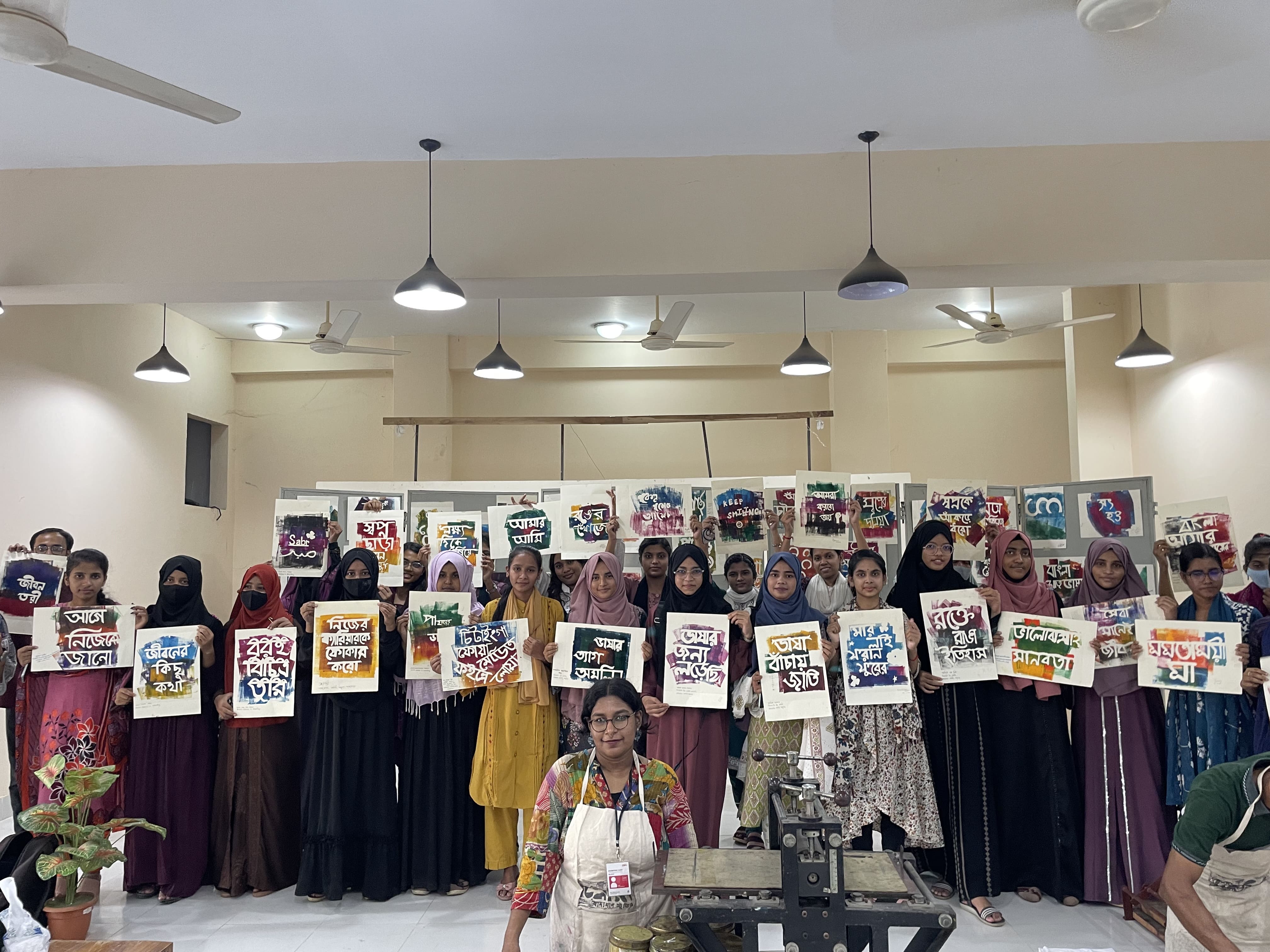
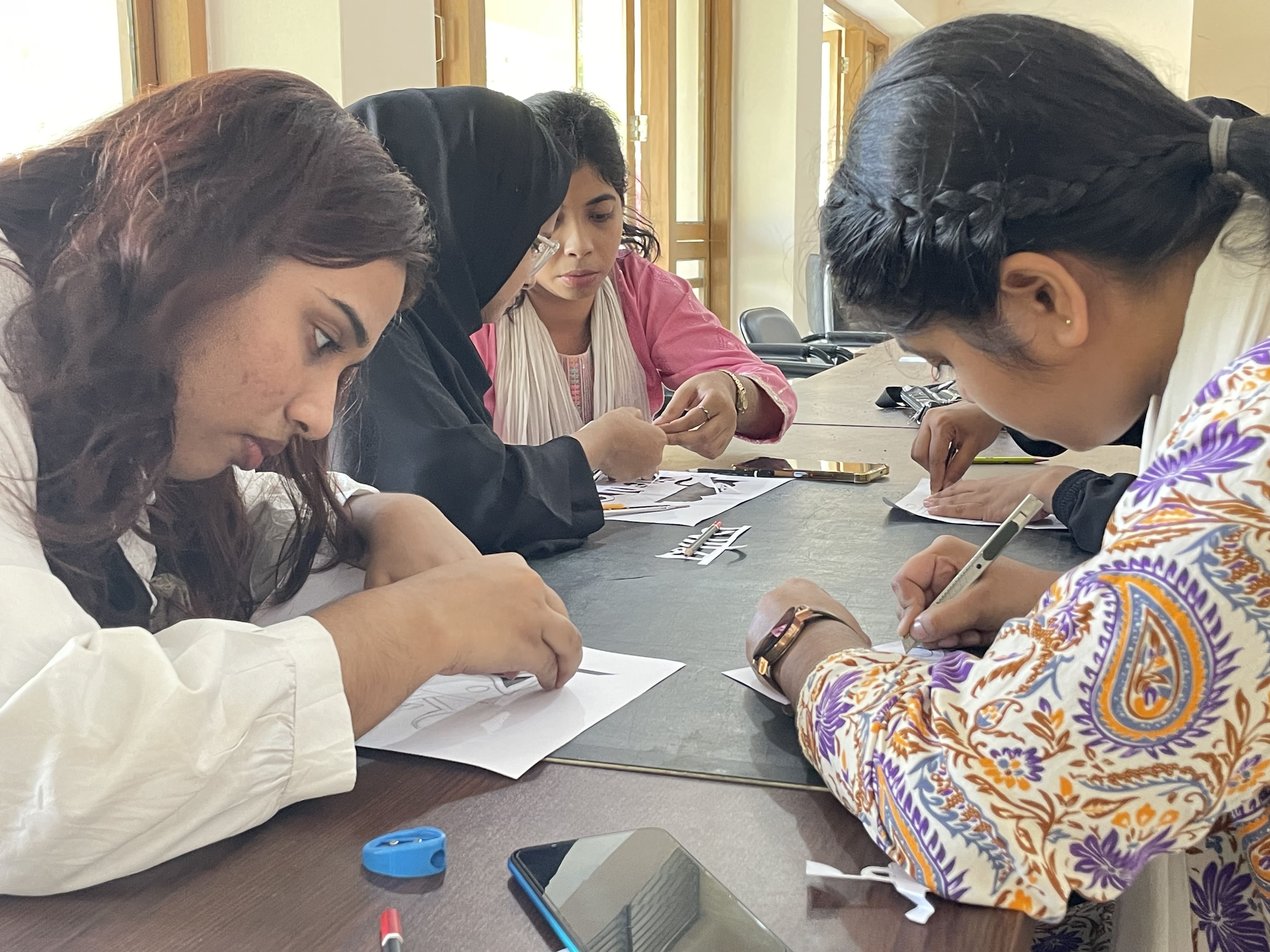
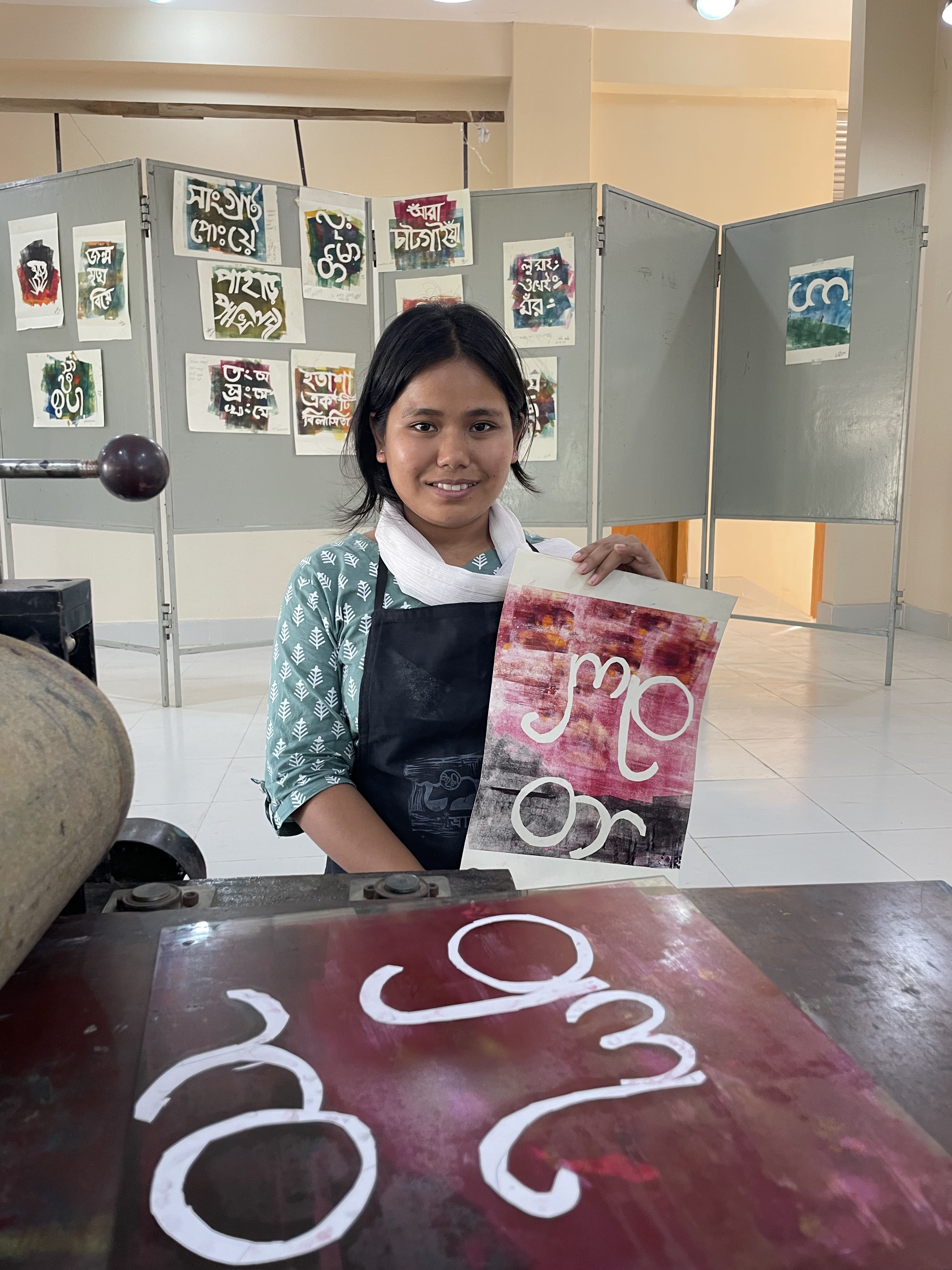
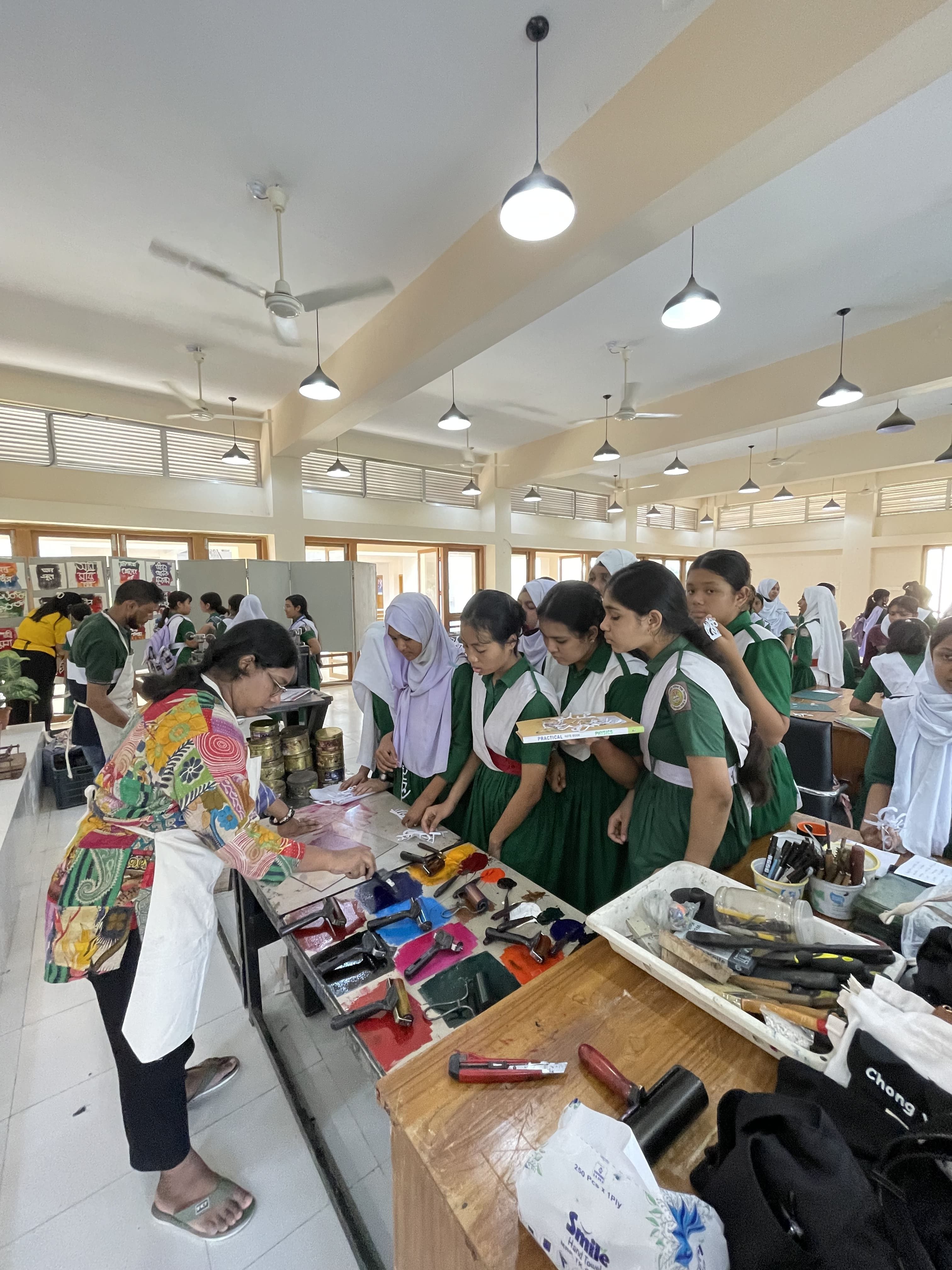
The workshop ran for two days at the Sadar Upazila Milnayatān, Bandarban. Participation was open to all, though prior registration was encouraged. I conducted one-on-one calls with participants before the sessions to introduce printmaking and the Bhashajog initiative, ensuring clearer understanding and stronger engagement on-site.
Bhashajog - Language, identity, and printmaking in the Hill Tracts
RANGAMATI
25 TO 26 OCTOBER
The Rangamati workshop was held at the Shilpakala Academy, Rangamati, continuing the Hill Tracts phase of the travelling initiative. The engagement centred on linguistic identity and cultural expression among Chakma, Marma, and surrounding communities, inviting participants to transform elements of their own language and lived experience into printed form.
Working within a compact field team, I supported coordination, participant engagement, and session facilitation on-site. Responsibilities were shared across the team, requiring adaptability and close collaboration throughout the programme.
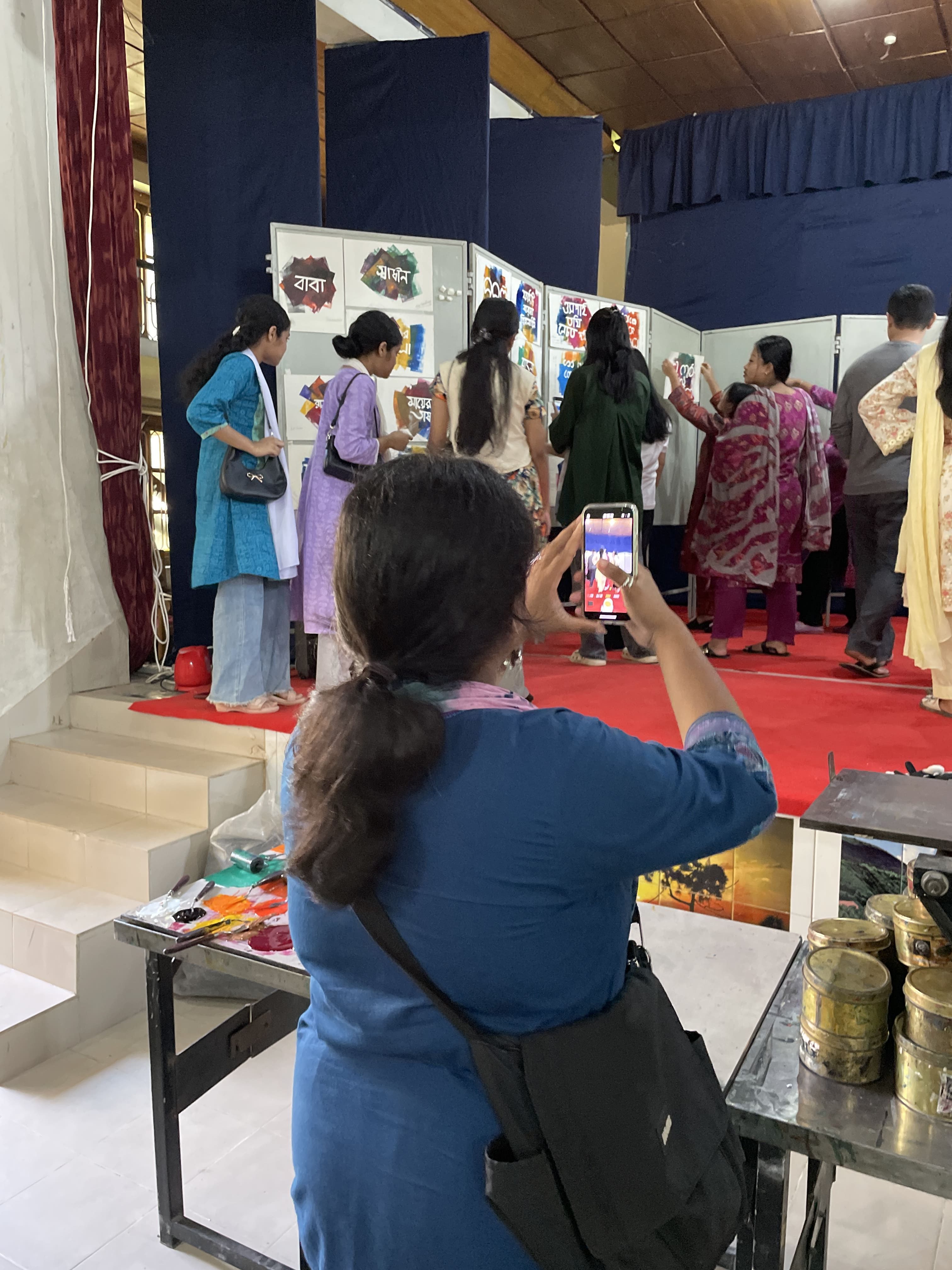
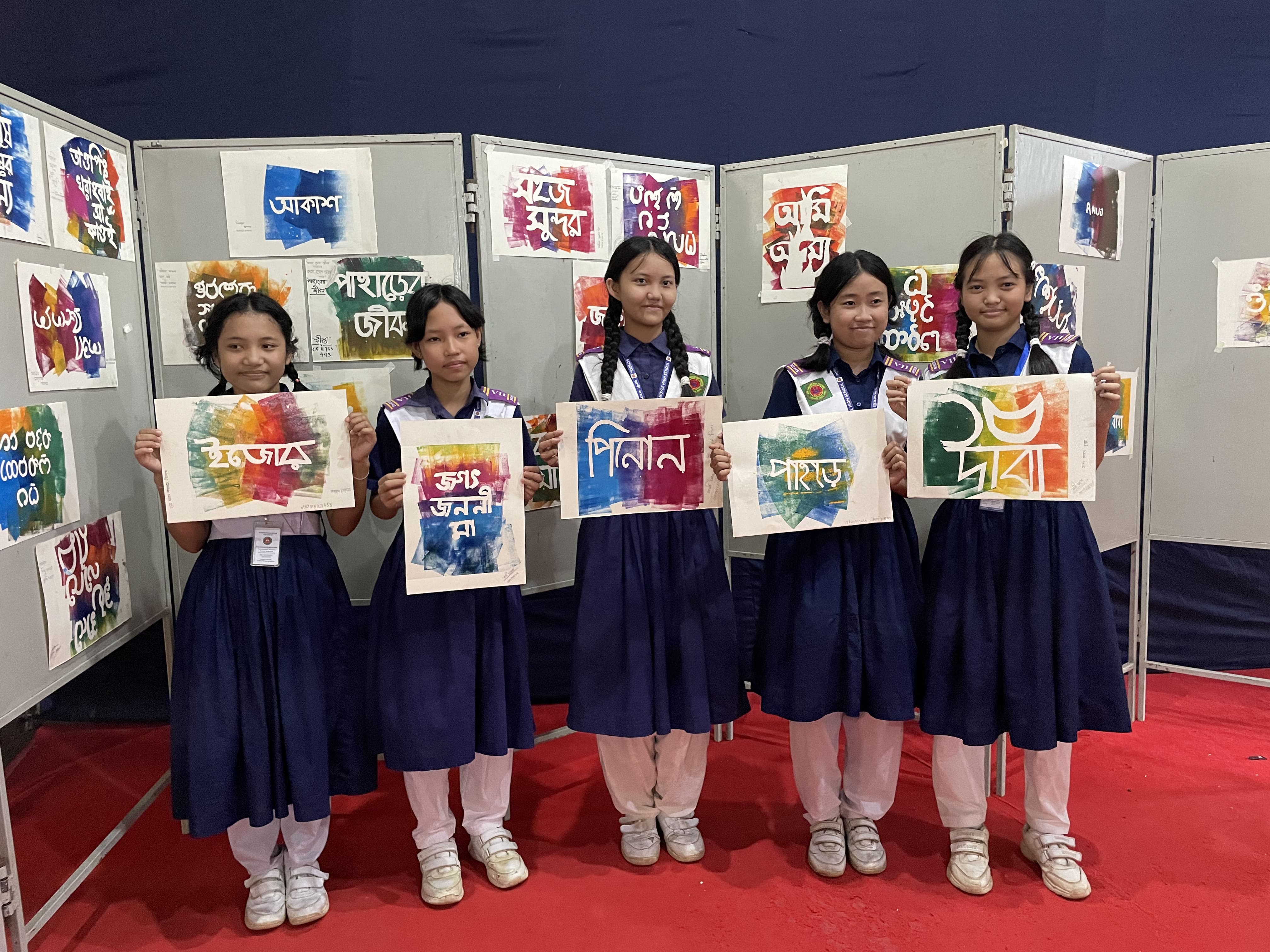
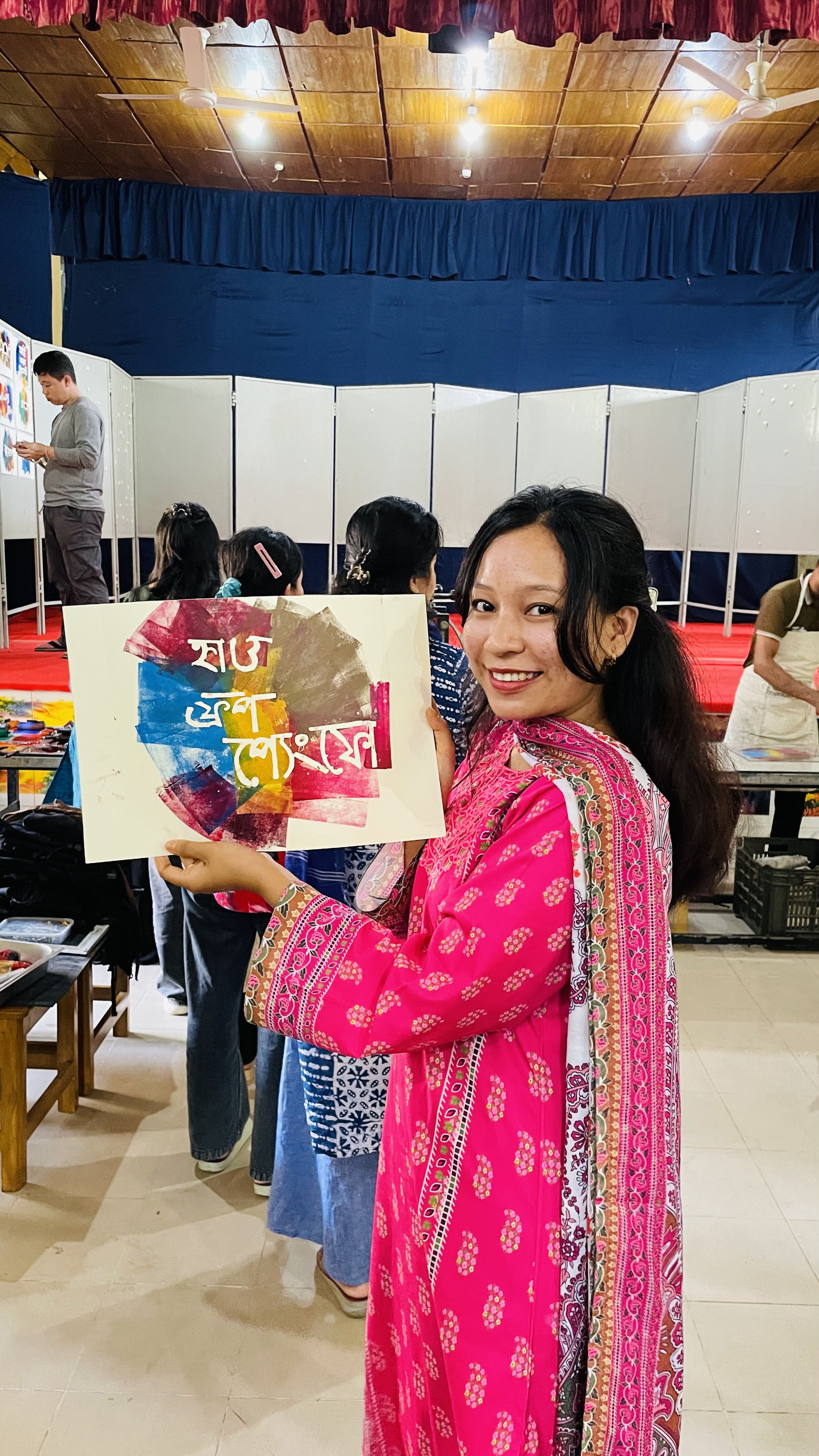
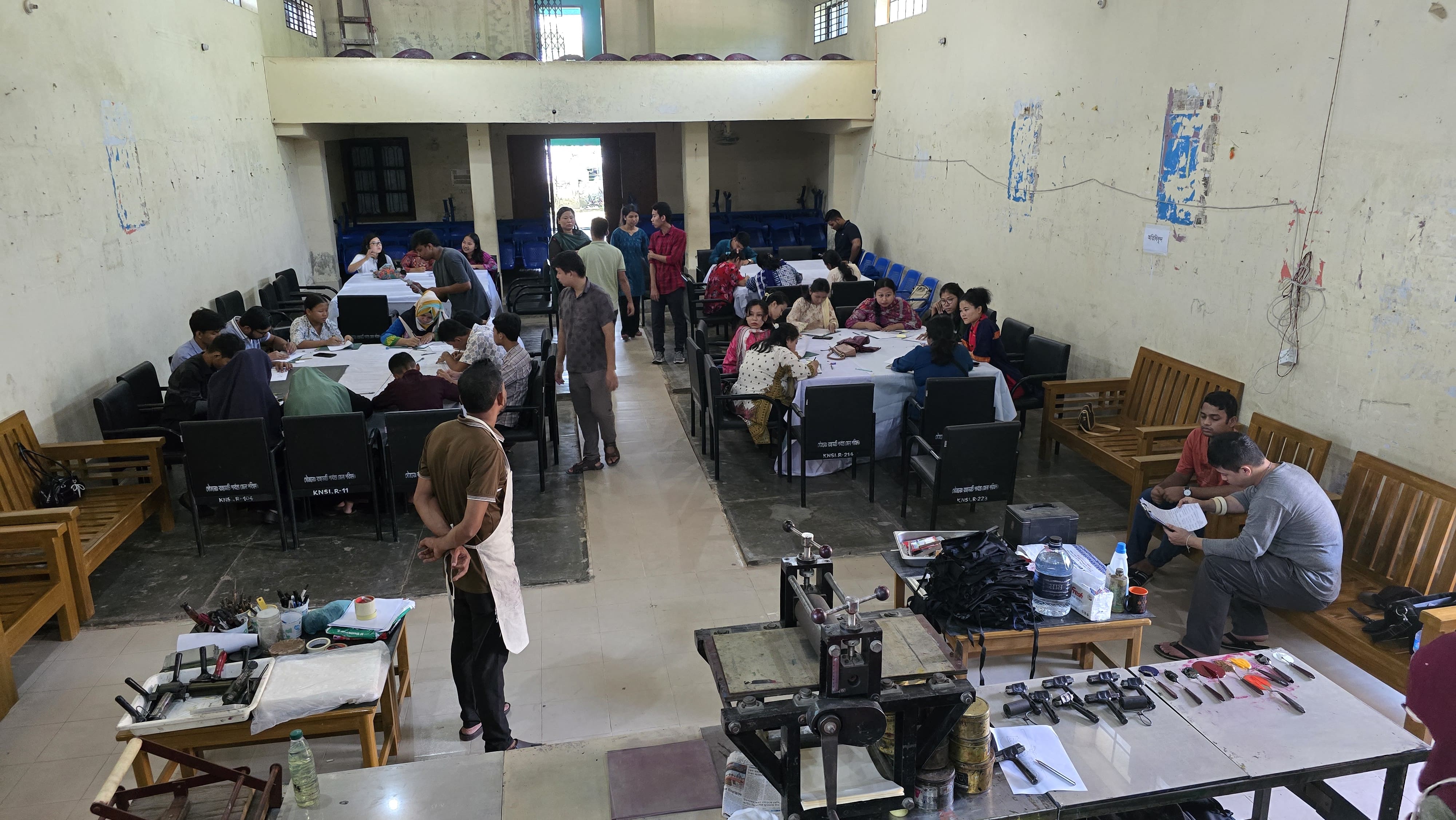
Participation reflected the region’s diverse Indigenous communities. Workshop formats were adjusted to align with local cultural context and participant interaction. Field coordination and documentation were managed collaboratively.
Bhashajog - Concluding the Hill Tracts journey through printmaking
KHAGRACHARI
28 TO 29 OCTOBER
Khagrachari marked the final destination of the Hill Tracts phase, hosted at the Upazila Parishad Hall Room, Khagrachari. The engagement brought together participants from Tripura, Chakma, Marma, and other neighbouring communities, focusing on language as lived experience and cultural identity.
Within a compact field team, I supported session coordination, participant engagement, and on-site facilitation across the two-day programme. The closing phase required careful balancing of logistics, communication, and process continuity, ensuring the initiative concluded with clarity and collective focus.
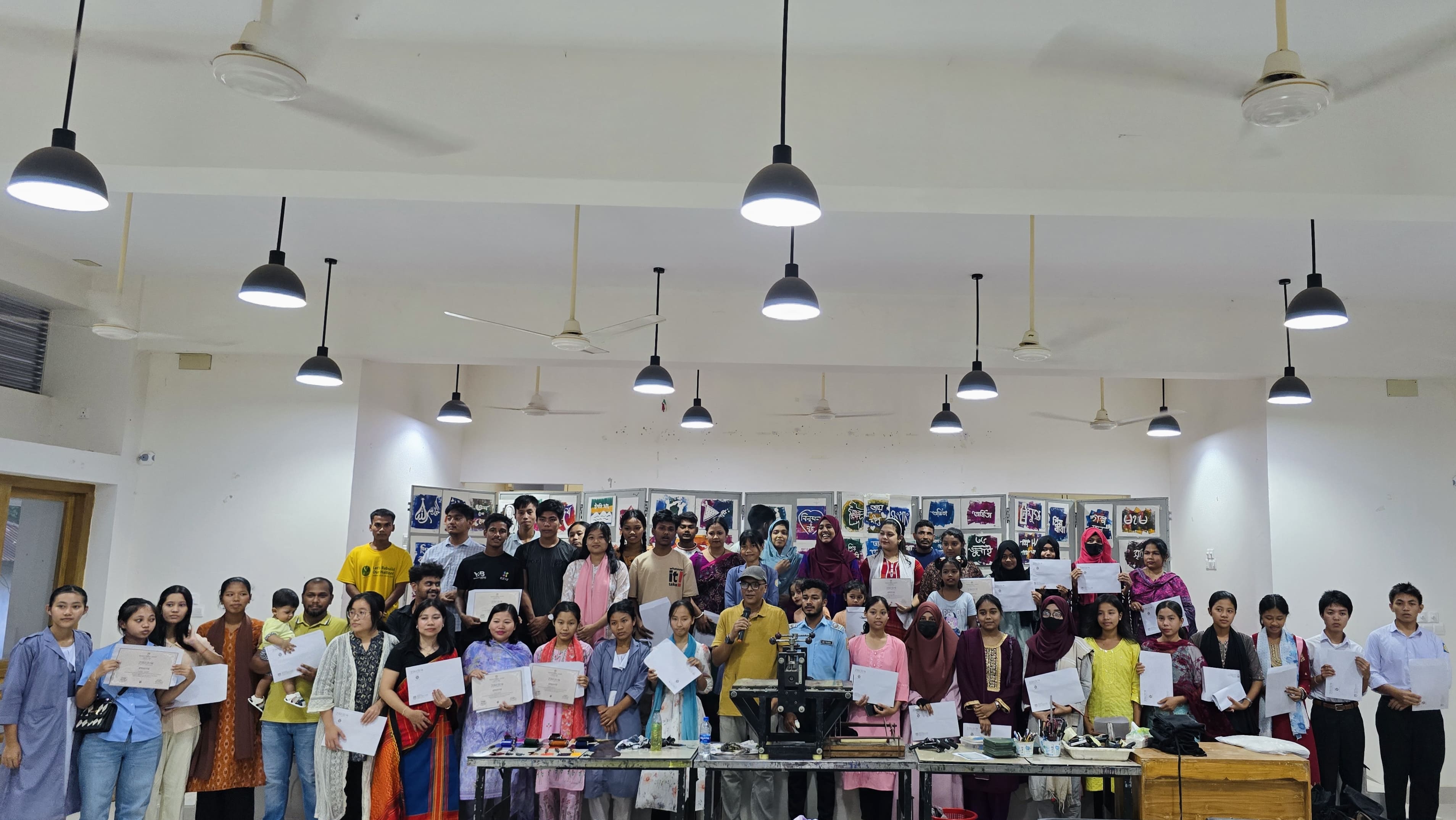
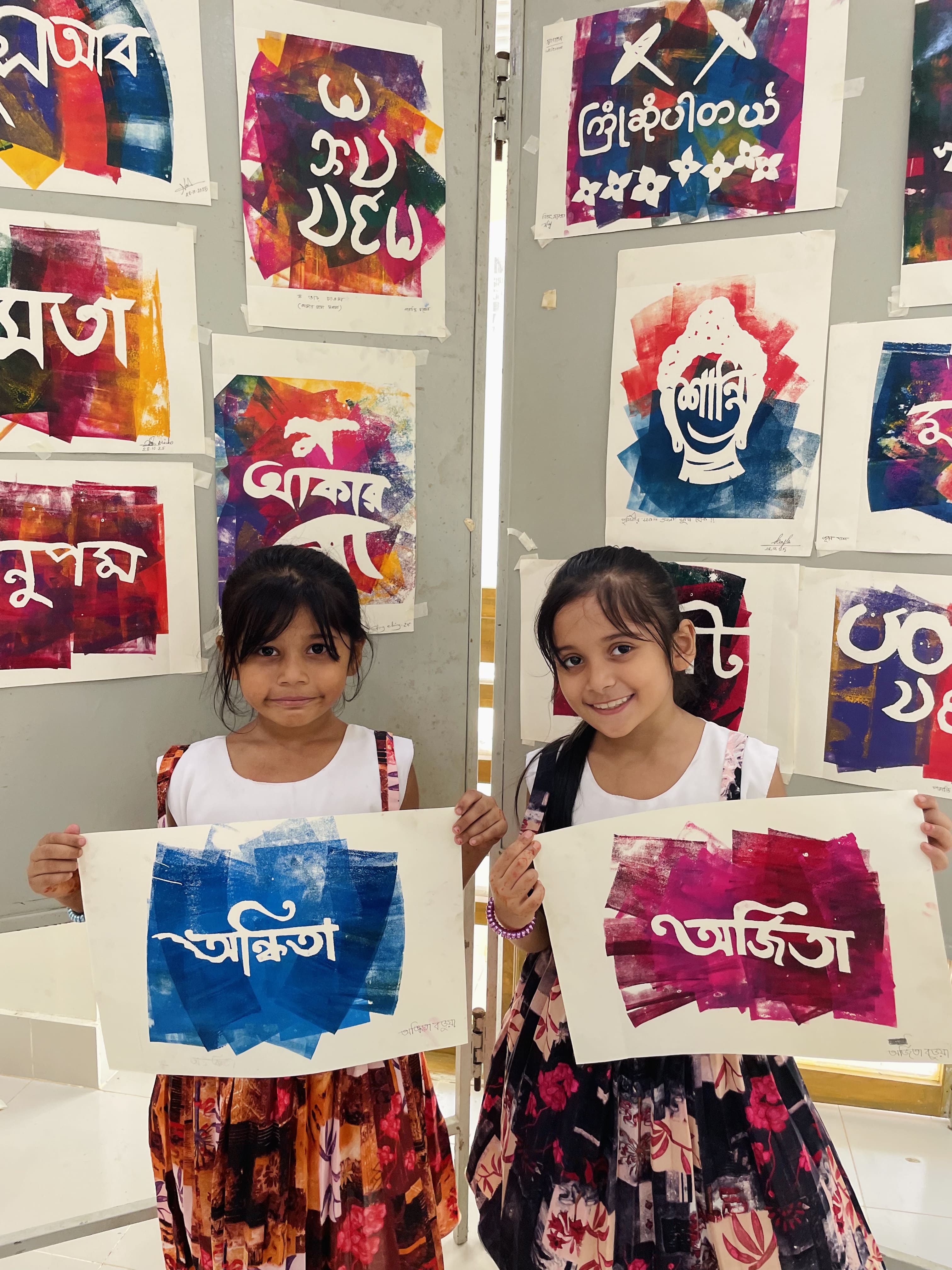
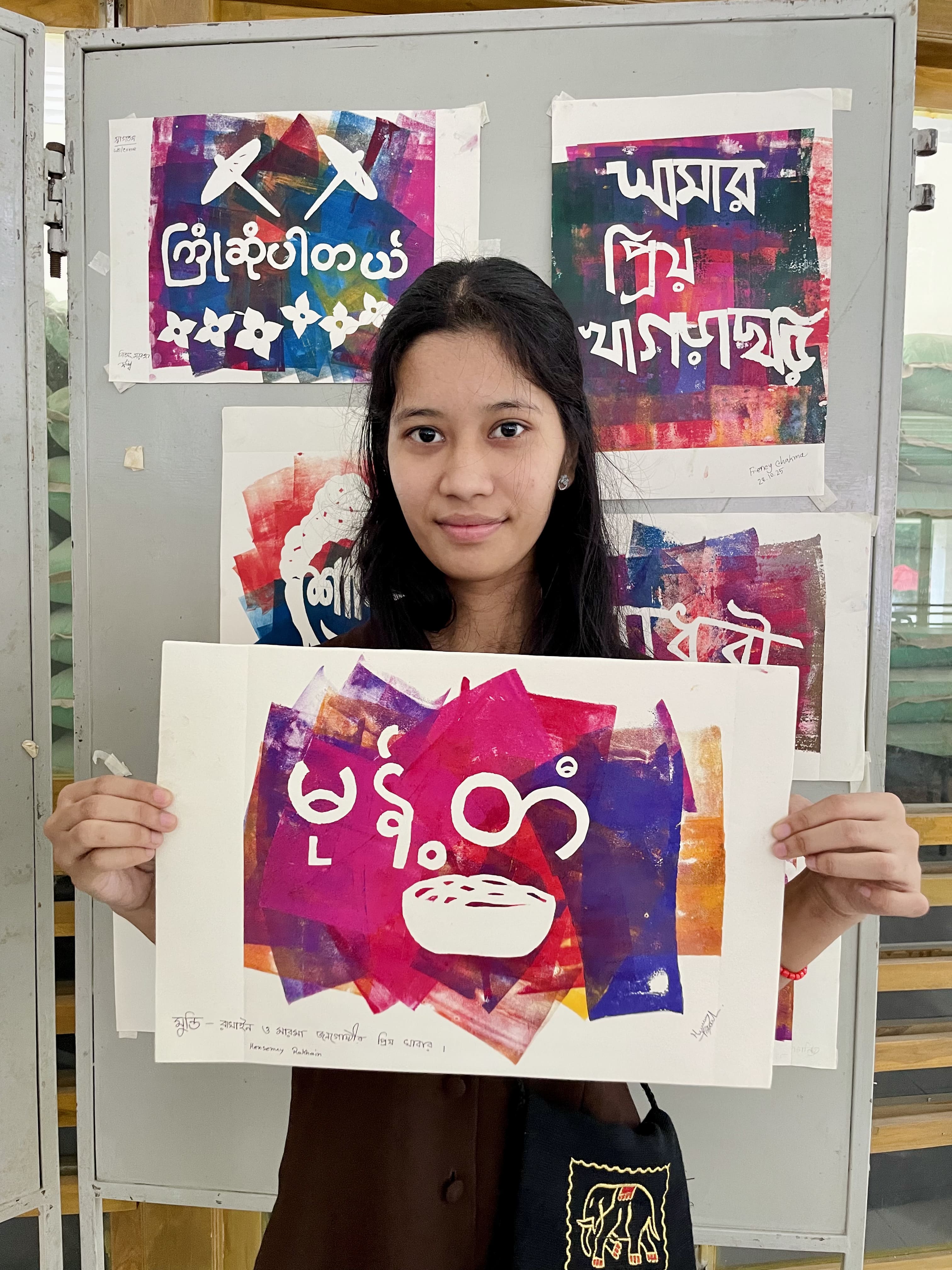
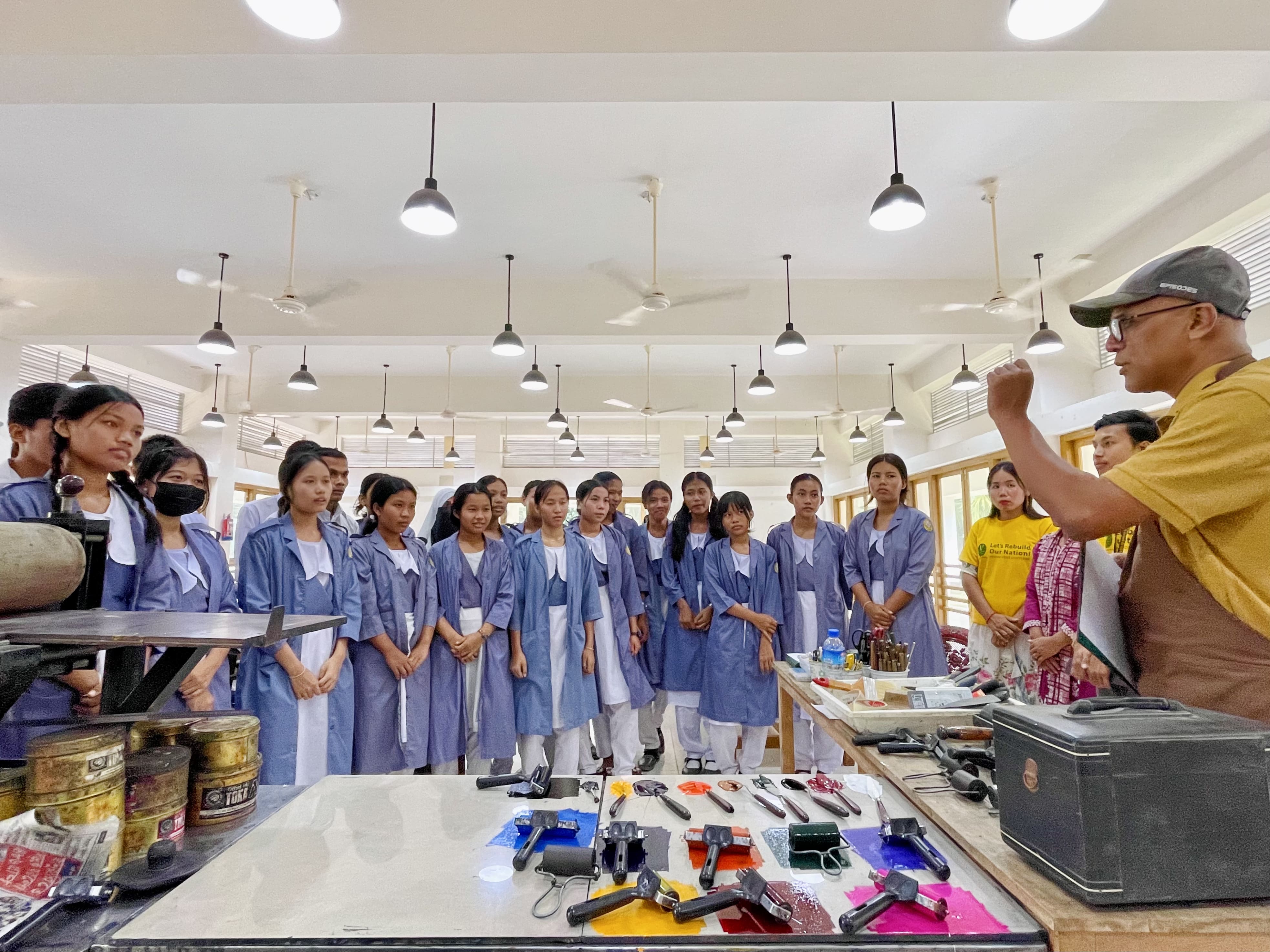
The programme unfolded over two days in Khagrachari. Participants represented multiple Indigenous communities across the region. Printmaking was used to interpret language, script, and cultural memory. This engagement marked the conclusion of the Hill Tracts travel sequence
After the Road
Chalantika is much less about "running workshops" and much more about arriving somewhere new and figuring things out together.