Concept & Archival Development

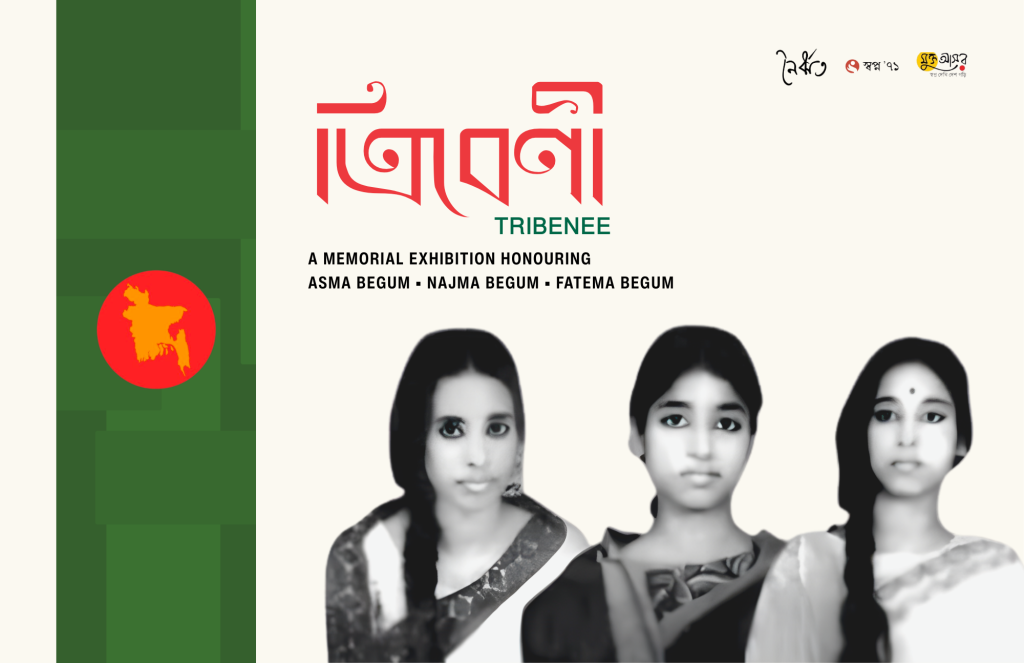
Tribenee I

Practice Type

Curation

Focus

Curatorial direction,
spatial narrative &
visual identity system

Timeline

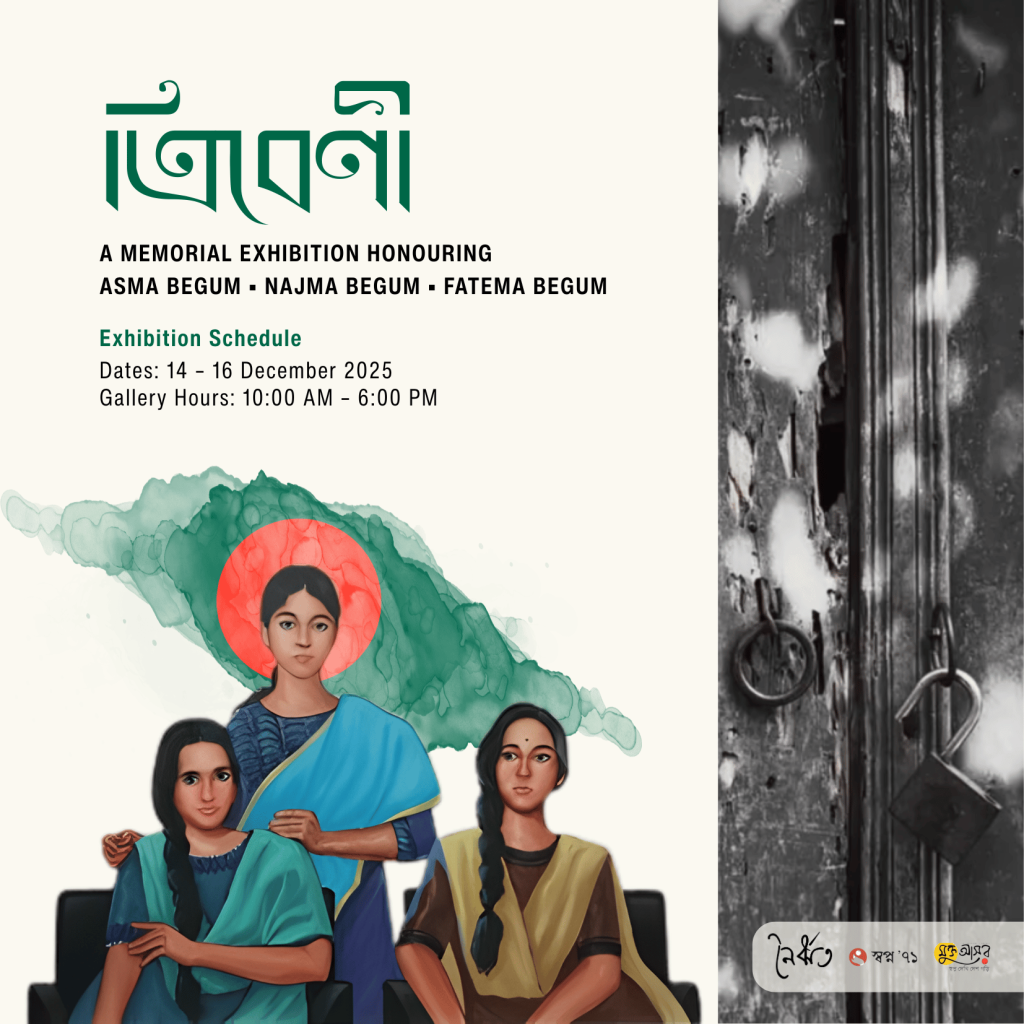
14 - 16 December 2025

Exbition overview

Tribenee evolved from archive into authored space.

Tribenee II marked a transition from archival reconstruction to curatorial authorship. Presented at Bikrampur Museum, the exhibition expanded its narrative structure, transforming memory into a spatial experience shaped by installation rhythm, material restraint, and visual coherence.

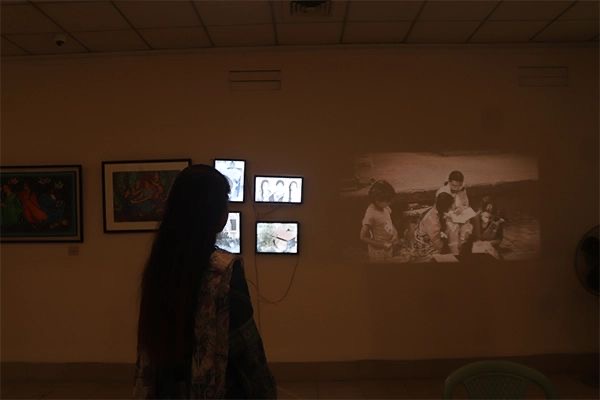
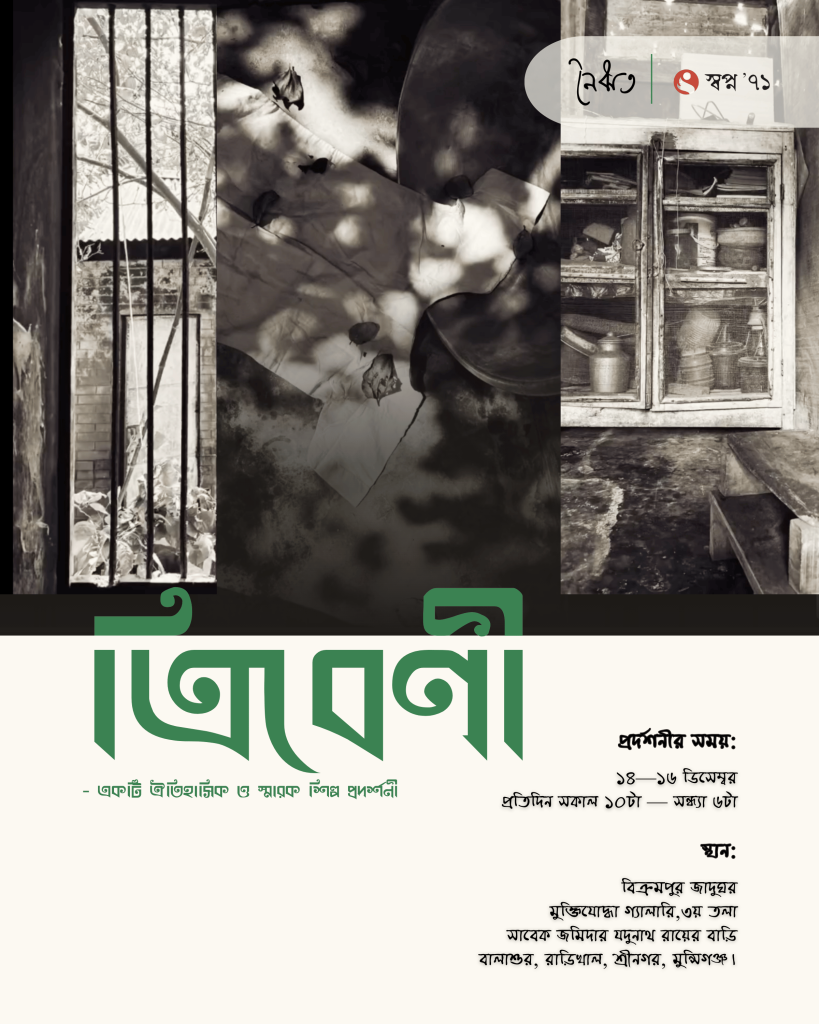
Rather than simply retelling history, the exhibition constructed an environment where viewers moved through layered encounters — domestic fragments, interrupted timelines, and embodied absence. The curatorial approach emphasized presence over spectacle and atmosphere over dramatization.

My role

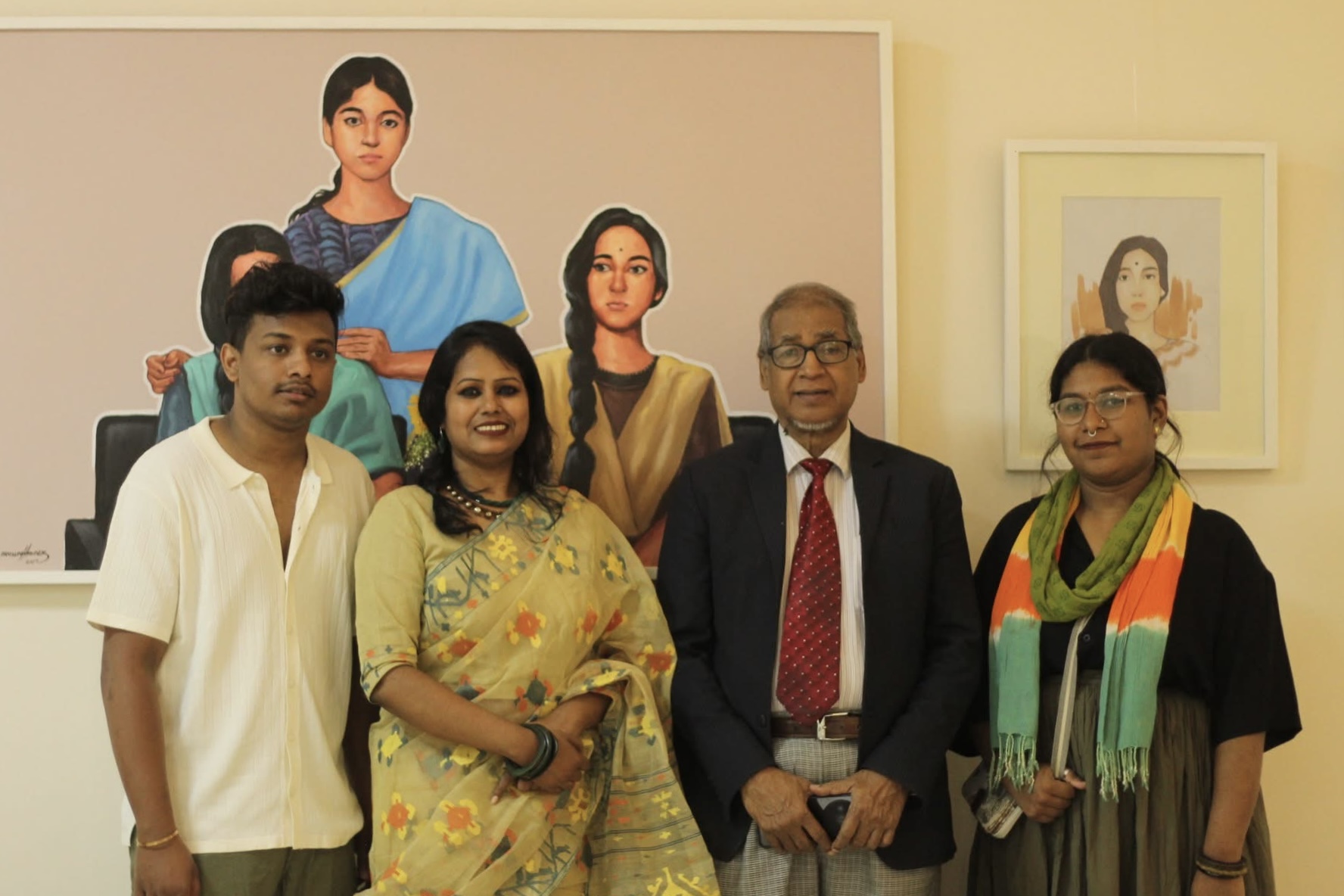
As Curator & Visual Designer, I developed the curatorial framework, spatial sequencing, and complete visual language of the exhibition — from installation logic to catalogue and banner systems.

Curatorial narrative development

Spatial sequencing and installation design

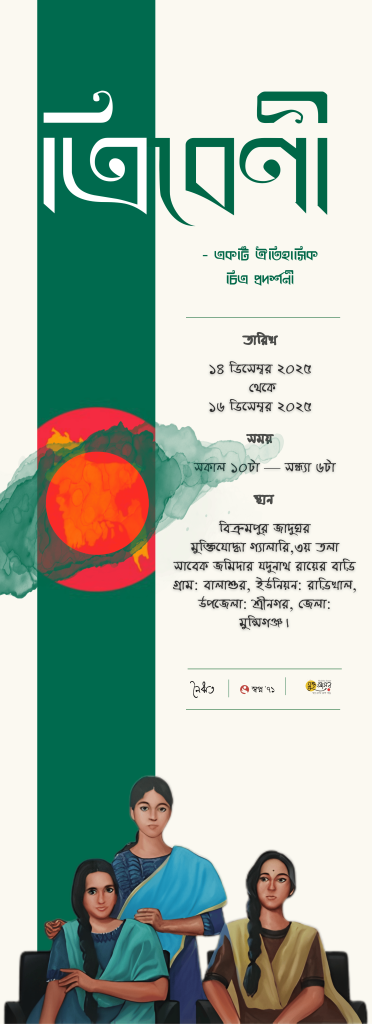
Visual identity system (typography, banner, posters, catalogue)

Wall text and exhibition writing

Coordination with museum team and collaborators

Media narrative preparation

INSTALLATION & SPACE

Tribenee II was structured as a progression rather than a display. The gallery unfolded as a rhythm of light, absence, text, and material texture — guiding visitors through a quiet but intentional encounter.

CURATORIAL VOICE

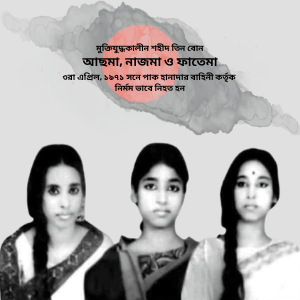
Curating Tribenee II required confronting an absence in national memory — the women who were neither armed combatants nor officially recognized victims, yet whose lives were equally claimed by war.

This recorded statement reflects on the exhibition’s central question:

How do we remember women whose sacrifice does not fit within state-defined categories of heroism?

Freedom is not only about those who carried weapons. It is also about recognizing silent sacrifice. And for me this exhibition does not attempt to prove history. It attempts to hold a question.
Why do we remember only the women the state could name?

VISUAL SYSTEM

The visual identity extended the curatorial argument. Archival tones, restrained typography, and minimal composition were used to preserve emotional clarity while avoiding aesthetic excess.

HOLDING THE QUESTION

Tribenee was less about “telling history” and more about learning how memory speaks.

Tribenee II was built around an unresolved absence.

Curating Tribenee II required accepting that not all histories can be resolved into recognition. The exhibition did not attempt to monumentalize sacrifice or stabilize memory into a single narrative. Instead, it was structured around a question: how do we remember women whose lives were claimed by war, yet never formally named within its heroic framework?

Every spatial decision — the placement of textiles, the presence of empty garments, the restraint of light — was shaped by that inquiry. Rather than proving history, the exhibition held space for ambiguity. Silence, repetition, and domestic fragments became communicative tools.

Sometimes curation is not about answering — it is about refusing to let a question disappear.